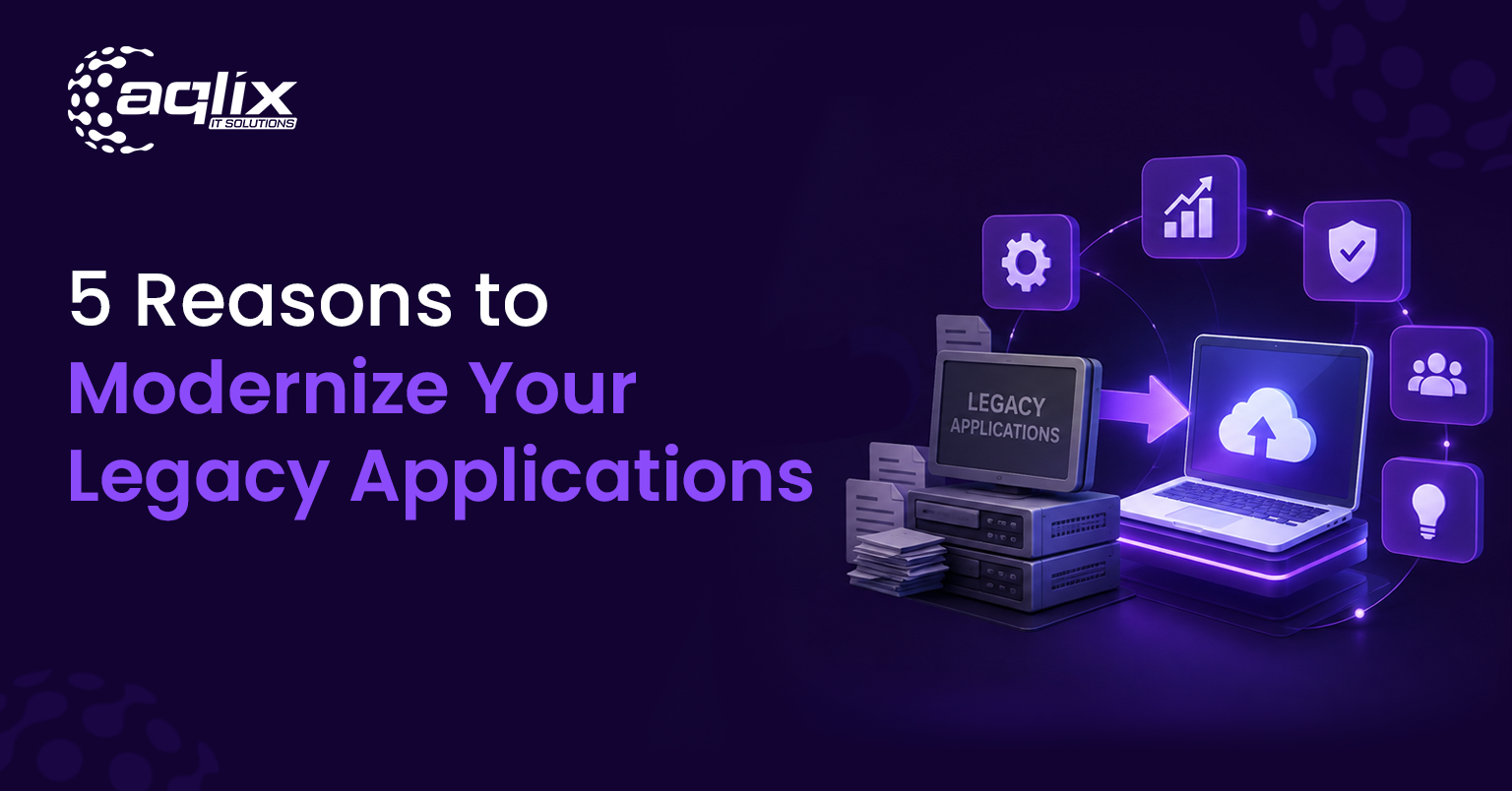

Architecture built to last is becoming increasingly apparent now for legacy systems built a decade or more ago, and the lack of updates is causing companies to waste money. Legacy systems built in the past lack the capability to scale horizontally with large user and high-volume transaction workloads.
Aqlix has helped businesses modernize legacy systems without sacrificing daily operations. Our application modernization services remove obsolete legacy systems and build reusable business logic in modern technology while retaining legacy systems that continue adding value to the business.
1. Aging Systems Break Down More Often Than They Should
Legacy systems were built before contemporary user volatility, transactions per minute (TPM), and integration demands, thus crashing more than legacy systems should. Outages suck employees away from their primary job to address deficiencies that should not exist.
Modern systems are built with a realistic expectation of today’s volatile user workloads and infrastructure that does not break under such demands and pressure. This stability offsets the cost to modernize legacy systems.
- Fewer unplanned outages: Modern systems rely on infrastructure that operates at today’s actual demand instead of legacy assumptions.
- Less firefighting for IT teams: Staff no longer need to focus on emergency fixes to keep systems running.
2. Finding Developers Who Understand Old Code Gets Harder Every Year
Programming frameworks and languages used in legacy systems diminish the pool of programmers who work with legacy systems each year, and the ones who remain are more expensive and fewer in number. Companies learn the hard way that bad product design costs them their subject matter experts who have critical information about the company. Custom software development can offer customers a viable alternative to legacy systems and reduce reliance on them.
By comparison, modern frameworks, technologies, and tools are architected, documented, and maintained by larger communities. This further decreases long-term reliance on a few people as the last ones with functional knowledge of legacy systems.
- Wider talent pool: Using the tools of the present means you have access to more talent while requiring less talent to utilize the tools.
- Better documentation and support: Legacy tools are often used without the necessary community documentation and resources, while most new tools offer this.
3. Legacy Platforms Struggle to Connect with Modern Tools
Modern work relies on several interdependent tools, which include CRMs, analytics, payments, etc. Users expect all tools to work together. Legacy applications were not designed with that degree of connectivity, and teams are left to build answers to that connectivity themselves.
Systems that have been modernized incorporate designs that leverage the ability for new functionality to connect with existing systems using modern APIs and integration frameworks.
- Seamless data flow: Data is able to transfer directly between systems. Manually transferring data can lead to data entry errors that are impossible to avoid.
- Faster adoption of new tools: Adding a new platform doesn’t require months of custom integration work to become a functional tool. This is why teams can begin to use new tools in a matter of weeks rather than toilsomely waiting through an intricate setup process.
4. Security Gaps Widen the Longer a System Goes Untouched
Vendors will stop releasing new features or security fixes for older systems. Until the old systems are retired, the associated vulnerabilities will exist forever. If a business processes stores financially sensitive or customer data, application modernization reduces the risk by providing systems built upon supported technology that is not old and outdated.
One of the ways to mitigate this risk is to modernize legacy systems, which also automatically grants newer security standards. This decreases the risk of an unknown backdoor and supports the systems actively.
- Active vendor support: Modern platforms update their security regularly and don’t use software that is abandoned and unsupported. This prevents known bugs in software from lingering instead of being addressed.
- Stronger compliance posture: Rebuilt systems usher in fewer challenges when data protection and industry regulations are implemented post-rebuild. This lessens the risk of the regulatory burden of perpetually evolving industry compliance standards.
5. Maintenance Costs Quietly Add Up Over Time
The cost associated with maintaining legacy software is often underestimated and may even include external support and maintenance costs. Such costs tend to increase over time, since they involve a lot of last-minute work.
The cost to update legacy systems gets more expensive the longer you wait to make the upgrade, while the cost for a complete system replacement and modernization stays relatively the same. In the end, businesses that update to newer systems usually discover they saved money.
- Lower long-term spend: New systems require less maintenance and unexpected fixes over the life of the system, resulting in savings that increases over the life of the new system.
- Freed-up budget: Money that used to be spent on system updates that are fully replaced by a modernization project can now be spent on the future of the business.
Conclusion
Legacy systems drain businesses through a number of short, frequent outages. The cost is hard to notice but adds up quickly over time. A system that is actively updated and fully replaced by a modernized system provides a stable base that gives businesses the ability to grow.
Aqlix IT Solutions provides businesses significant flexibility in the modernization of their legacy systems and ensures these systems stay updated over time. This helps prevent the same problems caused by legacy systems five years from now.
Frequently Asked Questions
What is application modernization?
Application modernization refers to the recreation of legacy applications using modern technology and cloud services. Performance, security, and scalability of legacy system improvements are some benefits of modernization.
How do I know if my business needs application modernization?
Some legacy systems show signs of needing to be modernized. These include crashes, inexplicable performance issues, challenges finding developers who understand the code, and integrating systems with other new and modern applications and technologies. These are all signs, and most businesses take workarounds to avoid these issues.
Will modernization disrupt our current business operations?
Modernization, when done correctly, shouldn’t require business slowdowns. Aqlix uses a modernization approach process that minimizes the impact experienced by clients.
Is application modernization only relevant for very old systems?
Even if an application was recently built, if it lacks the capability to scale or integrate easily, then that application needs to be modernized.
How long does an application modernization project typically take?
The time required is dependent on the application and the selected level of customization. It can take months, if not longer, for complex applications. Aqlix offers this service in a phased approach.