
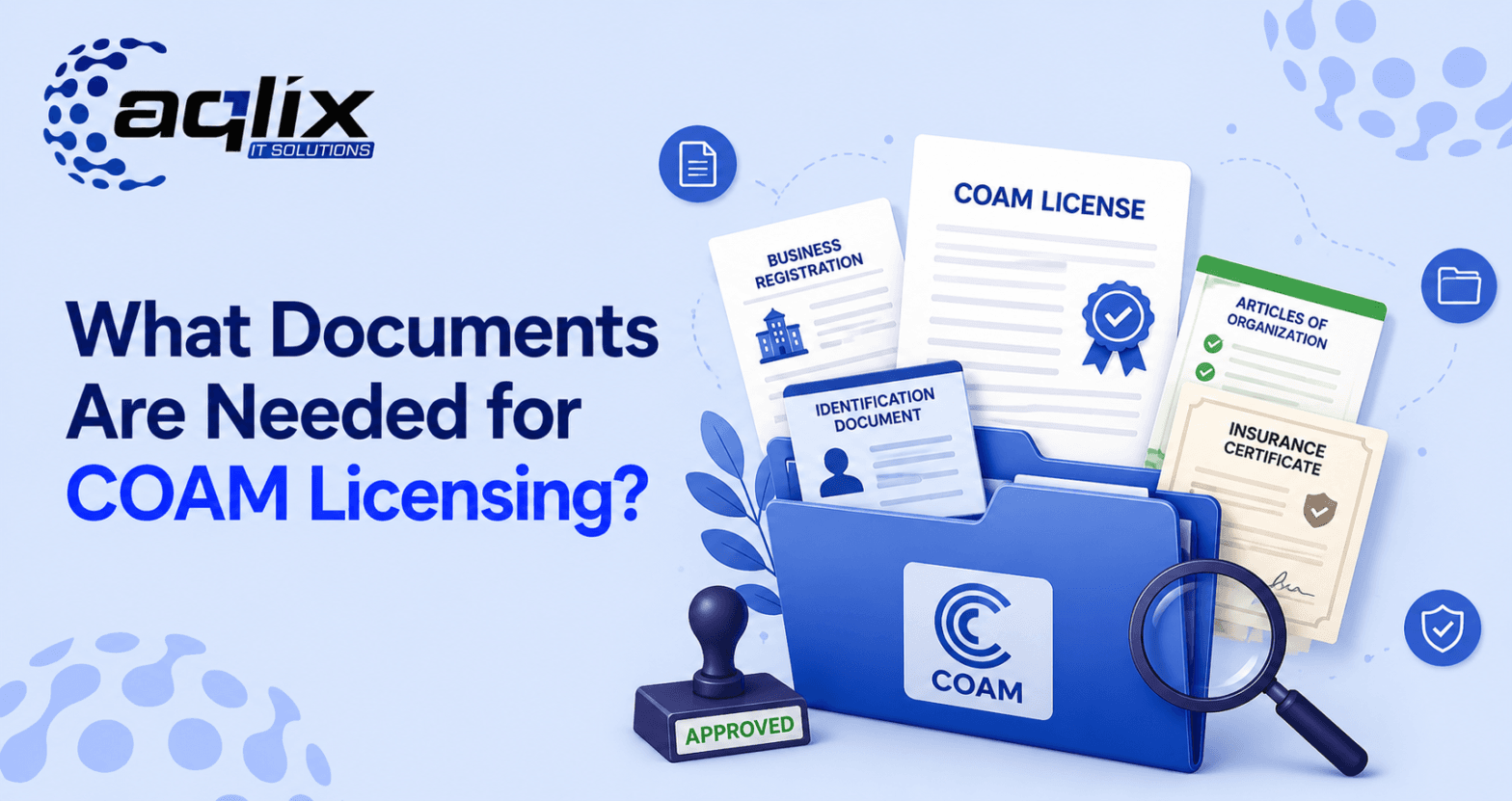

How to License a COAM in Georgia. Operators also have to collect and retain some documents that demonstrate their eligibility, compliance, and operational readiness. The lack of proper paperwork or inaccurate paperwork can make approvals longer and have unnecessary complications.
Knowledge of the necessary documentation allows Georgia COAM operators, master licensees, and location owners to better navigate licensing while ensuring compliance with relevant regulations in your business. Aqlix IT Solutions helps COAM businesses streamline documentation management, compliance monitoring and operational processes to ease efforts in maintaining accurate records necessary for licensing requirements and future audits.
Essential Documents Required for COAM Licensing
A well-supported application for COAM licensing begins with the proper documentation. Business owners, for example, must submit records to Georgia regulators showing that the business is real, who owns the company and when they are ready to comply. Having these documents ready ahead of time will save applicants from getting postponed, and the approval process itself becomes easier.
1. Business Registration and Identification Documents
For example, applicants are often required to submit documentation related to business formation, tax identification information and evidence of business registration compliance. They validate that the organization looking for a COAM license is legitimate. Georgia COAM Operators must verify that all information stays accurate and the same in submitted records in order to avoid failed processing issues and ensure effective COAM compliance efforts.
2. Ownership and Background Verification Records
Licensing authorities may even require information on ownership and supporting documents that identify the main players engaged in the operation of a business. Legitimate records are not only invaluable to regulators in determining legitimate eligibility but also allow for transparency of operations in the Georgia COAM industry. Keeping orderly ownership documentation helps with future compliance management and makes it easy to respond during compliance reviews or audits.
3. Location and Operational Documentation
Location owners and route operators sometimes require a document certifying authorized business locations for the operation of Coin-Operated Amusement Machines (COAM). This could include information on your lease agreements, any location contracts and records of operation. Below are key organized documentation management practices that ensure these records will be available whenever licensing reviews, updates, or regulatory inquiries arise.
Managing Documentation After Licensing Approval
The license is just the start of a compliance lifecycle. The business knows that record keeping and supporting documentation do not stop here. With effective document control, organizations minimize compliance risks and empower their operational efficiency and become regulatory-ready.
1. Maintaining Compliance and Audit Readiness
Even once they have been given license approval, there are long-term documentation requirements. Businesses should keep records related to operations, the placement of machines, counting revenue streams, settlement with winning reports and various compliance activities. Proper documentation under COAM enables easier audit preparation and allows an organization to respond quickly upon receiving regulatory requests. By taking a proactive approach, the burden on administration is much reduced and helps to ensure regulatory compliance in the long term.
2. Organizing Records Through Centralized Management
When operations expand to multiple locations, it will become harder and harder when managing licensing and compliance documents manually. When the records are missing or outdated, it can bring issues for inspection and compliance checks. Click here to schedule a demo With a possible solution, a centralized system that supports operators in focusing on documentation and visibility over their operations. The Aqlix COAM Management Solution helps Georgia COAM businesses with storing documents, tracking compliance and operational oversight of record-critical records that need to be easily accessible and manageable.
3. Using Workflow Automation to Improve Documentation Processes
Workflow Automation can streamline the process of managing licensing records and compliance documentation in a better way. By automating reminders, storing documents digitally and specifying approval workflows manual errors were reduced and operational efficiency improved. Operators have a lot to manage and this is where Aqlix IT Solutions come in with automated workflows for tracking documentation requirements, compliance records, and efforts spent on administration. This strategy helps businesses take less time on paperwork and more focus on the daily operations.
Conclusion
Licensing and Compliance with COAM rules in Georgia Proper documentation is essential for licensing, as well as managing compliance with the robust ongoing compliance requirements applicable to commercial owners/operators (COAMs). This is important as things like business registration records, operational agreements and audits are documented due to recordkeeping to mitigate delays or regulate issues.
With the Aqlix COAM Management Solution, Aqlix IT Solutions enables operators to simplify these tasks by providing tools that streamline documentation management regarding round changes and compliance tracking, reporting, and workflow automation around coin inventory in the operations. Having proactive processes and technology-based solutions will not only help businesses to efficiently carry out compliance duties but also stay compliant for many years.
FAQs
What is the most important document needed for a COAM license application?
In fact, business registration documents may be considered one of the most essential requirements as these documents help represent the legal entity of an applicant. These records allow regulators to confirm ownership and validate operations. Applications also need to guarantee that all information is accurate, current and synchronized with different licensing records.
Do COAM operators need to maintain documents after receiving a license?
Yes. Even if the documentation is approved by licensing, it does not absolve anyone from their responsibilities. Operators still need to keep track of compliance, gambling revenue, where they operate and what machines are located (where). Appropriate recordkeeping supports regulatory compliance and keeps a business ready when the audit of respective regulators comes.
How can businesses improve COAM documentation management?
COAM Documentation offers guidance for centralized recordkeeping processes, addressing issues of document storage (digitally) and the documentation process itself. Having a formalized process increases access, lowers administrative overhead and provides continuity of compliance management at multiple locations within the business.
How does workflow automation support compliance activities?
Workflow automation assists organizations to organize the documents, automate reminders, follow up on approvals and manage document accuracy. These capabilities minimize the need for manual effort and help ensure that important records are kept accessible. Organizations around the world depend heavily on workflow automation to make compliance processes stronger and strengthen operational efficiency.
How can the Aqlix COAM Management Solution help operators?
Aqlix COAM Management Solution (QCMS) is designed for process efficiency; it helps organizations manage documentation, reporting, compliance-related processes and operational activities through a centralized platform. The solution was developed in collaboration with Aqlix IT Solutions to ensure increased transparency and governance which would help Georgia COAM Operators streamline their operations while aligning them to future-proof compliance goals.