
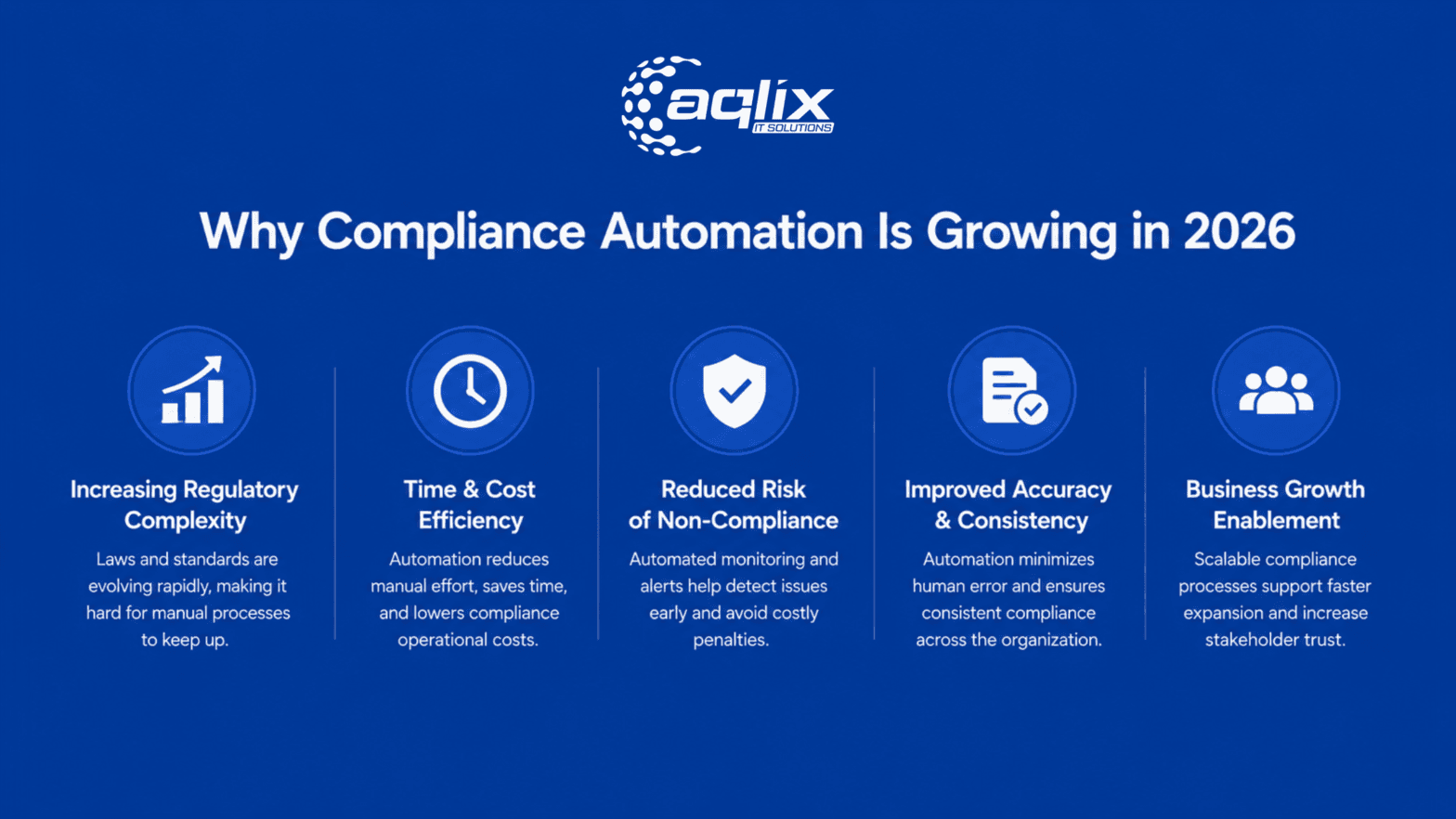

By 2026, the ability of businesses to handle massive amounts of digital data and harsh regulatory requirements accompanied by enormous cybersecurity pressure. Historically (or most recently) organizations across cross-sectors from healthcare to logistics to finance and tech have struggled with managing compliance manually. The spray and pray approach no longer works in a new normal, even the systems need to be equipped not just with capabilities to clean up records and automate repetitive activities but also keep an eye on functioning of business processes continuously.
Compliance automation reduces the cause of internal controls; helps simplify reporting operations, and operational risk. Businesses have also started moving to cloud infrastructure, driven by AI-based monitoring and secure workflow systems for better compliance readiness. The companies like Aqlix IT Solutions help the organizations by deploying scalable compliance automation systems that boost efficiency and back long term digital transformation initiatives.
Why Businesses Are Investing in Compliance Automation
This increasing burden on organisations to protect sensitive data, be audit ready and demonstrate operational transparency. However, this method usually ends up delaying reporting, causing inconsistent documentations and bringing human error into the equation. Compliance automation assists teams to run quicker through their challenges whilst aiding faster decisions.
1. How to automate compliance management
The first step in compliance management automation is to identify the repetitive processes like monitoring policies, documentation updates to use case-based reports on employee access reviews and analytics. Centralized dashboards, automated alerts and workflow approvs are used by businesses to ensure consistency in operations.
Cloud-based infrastructure, automated deployment pipelines and secure monitoring environments that simplify compliance tracking, operational governance have been carried out by Aqlix IT Solutions working with healthcare and logistics businesses.
2. How to automate audit processes
Audit automation optimizes auditing by collecting, organizing, and validating compliance records. Unlike applications that will be used only for tests, automated systems follow (and log) user activities and automatically create reports without the need for human intervention from internal teams.
Aqlix IT Solutions automated workflows to minimize reporting delays and heightened visibility into enterprise operations on various enterprise modernization projects, enabling companies to prep for audits more predictably and efficiently.
Key Benefits of Compliance Automation
While organizations deploying compliance automation have reaped the benefits on multiple operational fronts, Automatable systems obviate reliance on manual supervision whilst enabling an agile response to any changes in regulation and cybersecurity threats faced by organizations.
Here are some of the major advantages.
- Faster compliance reporting and documentation
- Reduced manual administrative work
- Better Data Accuracy and Audit Readiness
- Improved monitoring and control access of Cybersecurity
- Centralized workflow management
- Real-time alerts for policy violations
- Better scalability for growing organizations
- Improved operational transparency across departments
Automation ensures business continuity during system upgrades, remote-working operations, and cloud migration projects.
1. How to reduce manual compliance tasks
Compliance teams usually perform repetitive tasks of documenting, spreadsheet tracking, requesting approvals and policy updates manually. Manual work gets simplified by these activities through automation of the workflow process and synchronized monitoring systems.
For instance, Aqlix IT Solutions has assisted organizations in deploying CI/CD pipelines, automated deployment systems and cloud custodial operational controls that have substantially minimized their reliance on manual monitoring and repetitive reporting processes.
2. How to improve cybersecurity compliance
Businesses need to monitor live infrastructure, determine which users access which resources, and safeguard sensitive data for cybersecurity compliance. They identify vulnerabilities, monitor suspicious activities and enforce access control policies better than automated methods.
In Healthcare and Logistics modernization projects, Aqlix IT Solutions had the plan to introduce web application firewalls, encryption standards, role-based access controls, and automated monitoring systems to enhance data security while complying with some mandatory requirements.
The Role of Cloud Infrastructure in Compliance Automation
Modern compliance strategies are heavily based on Cloud technology. By migrating to the cloud infrastructure, businesses have scalable monitoring tools, centralized data management and automated recovery systems that control different aspects of operation resilience.
System updates, backup management and infrastructure monitoring are made simple with use of cloud environments. Organizations transforming into a state of embracing containerization, Kubernetes and automated deployment systems should opt for solutions that allow them to ensure compliance related standards are in place while enhancing scope for future growth.
How to automate risk management
Companies need automation in risk management, which helps detect vulnerabilities and respond to operational disruption quickly. These include automatic analysis of system activity, creating alerts and enabling rapid response to incidents.
Since its inception in 2020, Aqlix IT Solutions has aided organizations with automated monitoring systems, secure environments for data and personalized workflows that enhance risk visibility and strengthen operational reliability across business processes.
Industries Driving Compliance Automation Growth
Due to the confusion in rules and regulation complexities along with operational drive, many of the industries are fast tracking automation for compliance.
Key sectors include:
- Really big deal: Healthcare organizations controlling patient data and privacyCompliance
- Logistics firms managing operational tracking and shipment information
- Enhanced audit reporting and security monitoring by financial institutions
- Retailers that modernize their customer data management systems
- Mature SaaS The years ahead of building secure development pipelines.
- Manufacturing companies improving operational governance
Healthcare organizations in particular cannot afford to not have very reliable systems, preferably with continuous monitoring. Similarly, logistics businesses rely on these automated workflows to have competence in operational activities while also being available with secure customer portals.
Conclusion
Compliance automation is imperative as organizations navigate complex operations, cybersecurity risks and regulatory changes in 2026. Such automated systems lead to improving the accuracy and reducing the manual workloads, as well as reinforcing operational visibility across departments.
As such, companies implement cloud infrastructure, workflow automation and secure ways to monitor their systems enabling them to easily manage growth and address compliance issues going forward. Aqlix IT Solutions, the provider of the letter this is aimed at helping organizations modernize operations through scalable automation, cybersecurity and compliance-focused technology solutions.
FAQs
What is compliance automation?
Apart from this compliance automation uses software and automated workflows to make sure the regulatory task, documentation, monitoring and reporting. It reduces manual effort also ensures operational accuracy. Organizations leverage compliance automation to stay audit-ready, bolster cybersecurity monitoring and simplify compliance management across lines of business and operational systems.
Why is compliance automation important in 2026?
With the introduction of more extended regulations, significant data sets of information that must be processed per second with never-ending threats from cyber-attacks since compliance automation. When compliance systems are automated, organizations have a clear track record that they can execute the operations in a timely manner when activities requires it like policy changes or a security event occurred. It ultimately results in greater transparency at the operational level and more consistency in workflow.
How does compliance automation reduce operational risks?
These automated systems, constantly monitoring workflows and detecting abnormal activities are warning you through alerts even before the problem can worsen. This can help enhance the visibility of risk and improve incident response processes. Automation will likewise abate human mistakes, improve documentation oversight and support safe access control all through enterprise systems in addition to the electronic operations.
Which industries benefit most from compliance automation?
Compliance automation pulls a lot of weight in healthcare, logistics, finance, SaaS, retail and manufacturing industries. They are responsible for sensitive data, operational tracking and regulatory reporting needs. Automating also allows workflows to be easier to track, provides compliance with cybersecurity protocols, improves operational efficiency and makes layout for an audit while simultaneously allowing organizations for scalability as well as business modernization.
How does Aqlix support compliance automation projects?
Aqlix IT Solutions enables the businesses to have cloud infrastructure and implement automated deployment systems with secured monitoring environment as well as optimize workflow. Their expertise encompasses modernizing healthcare systems, upgrading logistics systems, improving cybersecurity measures, and scalable tech-enabled compliance-focused solutions for enhancing operational efficiency and security.