

SEO strategies based on conventional optimization no longer function as well as before, with smart speakers, virtual assistants, and mobile voice searches becoming more popular. Fragmented short keywords do not fit the natural language pattern, and 50% of consumers have already started using the natural language to search online.
So, Aqlix assists businesses in the transition from Type-to-Search to Conversational AI Querying so that your websites respond to how humans speak. Voice Search Optimization (VSO) is a process of aligning your content and technical framework to be more visible, authoritative, and accessible to modern users.
Why Voice Search is Redefining SEO
Voice search is changing the dynamic of SEO by focusing on context, intent, and conversational language. This requires businesses to rethink the way content is structured and optimized.
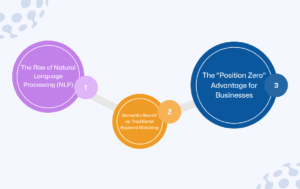
1. The Rise of Natural Language Processing (NLP)
NLP enables search engines to supplement precise keyword matches with an understanding of context, intent, and semantics. Voice-based queries are analyzed for meaning, allowing AI assistants to provide accurate responses. VSOs make sure your content is formatted correctly so that algorithms can understand the context of your text, increasing both the likelihood that it will appear in a spoken response and user engagement.
2. Semantic Search vs. Traditional Keyword Matching
Traditional SEO targets short keywords, but voice queries tend to be longer and more conversational. Users enter complete questions. “How do I increase website traffic using AI tools? instead of typing “AI tools traffic.” Content containing long-tail, natural language keywords is more likely to appear in voice search outcomes.
3. The “Position Zero” Advantage for Businesses
Featured Snippets, or “Position Zero,” are the one answer that voice assistants read to you. In order to enhance brand authority, such content should be optimized in a way that gets displayed in this spot, this leads to organic traffic on the site. Through structuring FAQs, tables, and straightforward answer sections, Aqlix helps websites find these spots, turning voice search into actual revenue.
Technical and Content Strategies for VSO
Voice search optimization includes technical changes and content restructuring. Ensure your site is discoverable, fast, and authoritative by aligning these strategies.
1. Implementing Schema Markup and Structured Data
Structured data assists search engines in recognizing the content that will be suitable for voice playback. Businesses can add tagging of important sections of pages and blog posts with the help of Speakable Schema and JSON-LD. This enables the AI assistants to pull up and read relevant answers when asked, increasing visibility. “Implementing proper schema keeps content readable for crawlers and in conversational style for humans.”
2. Optimizing for Local SEO and “Near Me” Queries
Voice searches often contain location-based questions such as “coffee shops near me.” The up-to-date Google Business Profile, optimized local landing pages, and geotargeted keywords will ensure that the businesses get the customer in need of a nearby store on-the-go. With a machine learning perspective that informs local SEO, Aqlix positions your voice search presence to align hyper-relevantly with the consumer intent.
3. Rebuilding Content Around Long-Tail Conversational Keywords
Reorganizing the content into question-answer or FAQ format aligns with how voice search queries are phrased. Long-tail conversational keywords convey how users speak in real life. To optimize this aspect, AI-driven analytics is essential for ongoing adjustments, ensuring that your content addresses queries proactively and features relevant detail to make it more readable even by voice assistants.
4. Enhancing Mobile Performance and Page Speed
For voice searches, page speed and mobile responsiveness are crucial. Users have a tendency to expect instant results, and so do AI assistants, they’re fans of fast-loading websites. Literally, enhancing images, taking advantage of browser caching, and minimizing render-blocking scripts lead to smooth sailings in the mobile UX scene but also technical tweaks that play a major role in raising high engagement levels while stopping the bounce rates in their tracks.
Measuring Success and Future-Proofing
But tracking VSO performance ensures you’re optimizing your investments to get measurable results while preparing your website for the future of AI-driven search.
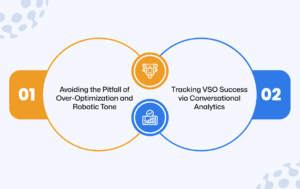
1. Tracking VSO Success via Conversational Analytics
In the data, you can quantify VSO impact by monitoring question-based traffic and search impressions or spoken-answer click-through rates in Google Search Console or analytics platforms. Aqlix uses AI analytics to recognize patterns, track ROI, and revise strategies. After all, these insights show which queries drive engagement to allow businesses to tailor content for the best interest in voice search contexts.
2. Avoiding the Pitfall of Over-Optimization and Robotic Tone
Content should still sound human and read well while optimizing for voice. Repetitive keywords or awkward wording kill credibility. Aqlix focuses on brand voice, they will help ensure the AI-generated content is engaging, informative and conversational without sacrificing quality in order to have it optimized for AI.
Conclusion
Voice search has become a fundamental part of digital marketing. Websites that do not evolve risk tugging down on the visibility scale and losing consumer interaction. To ensure your brand gets heard out loud, understood and recommended by AI assistants not just in text but also through voice-NLP optimization is the way to go.
Aqlix IT Solutions assists businesses in embedding technical SEO, structured content and ML-powered analytics to leverage voice queries, enhance discoverability locally and claim featured answers. Get a more voice-search ready website with us, Aqlix and beat competitors in 2026.
Frequently Asked Questions
What is voice search optimization (VSO)?
Voice search optimization is the practice of adjusting a website’s content & technical structure to be found by artificial intelligence assistants and voice-assisted devices. Conversational keywords, structured data, fast-loading pages and mobile responsiveness are the underpinnings of voice search optimization, they all contribute to better visibility in spoken search results.
How does NLP improve voice search results?
Search engines use Natural Language Processing (NLP) to interpret the context, intent, and semantics of queries. With NLP-oriented optimization, businesses guarantee voice assistants deliver accurate and relevant responses with high chances being in Position Zero and swaying user engagement towards their optimized content
Why is local SEO important for voice search?
A lot of voice searches are location-based, such as “restaurants near me.” By optimizing local listings, updating Google Business Profile, and including geotargeted keywords in the text of your website or business profile listing page businesses can cover those high-intent, locally onsite users and make that voice query turn into footfall or a call or any online interaction.
How can I adapt website content for conversational queries?
The reason for this is that all the headings need to be re-written and structured into FAQs, bullet points and of course question being posed in such a manner that they are easy to digest in quotation format. Using long-tail conversational keywords that mimic how users speak increases discoverability. By adding the AI analytics that focus on monitoring similar searchable queries, one gets to keep improving for a better alignment as per all voice-search conduct.
What technical factors affect voice search rankings?
And voice search visibility is influenced by factors such as page speed, mobile responsiveness, structured data (schema markup) and secure HTTPS connections. Optimizing these points helps with serving content that’s fast, accurate and dependable, making it more likely that AI assistants will select your site as the spoken solution.