

Search engine optimization (SEO) is changing fast as search engines increasingly serve AI generated summaries that address queries in situ on the results page. Keyword matching is no longer sufficient to guarantee visibility.
Instead of now fighting to be ranked first, businesses need to transition toward being the most trustworthy source for AI search systems when the source-cited result is generated. This transformation necessitates a hybrid approach of technical SEO, authoritative content, and Generative Engine Optimization. Aligning Digital strategies with emerging technologies, Aqlix assists organizations to transcend this AI driven search environment.
The Conceptual Shift to Search Inclusion
Search engines are not just about matching up keywords anymore. New algorithms examine meaning, authority and context to provide better answers. For entrepreneurs seeking stable visibility, the content needs to be structured in a manner understandable and well referenced by AI systems.
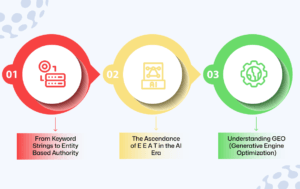
1. From Keyword Strings to Entity Based Authority
These days, search engines understand entities brands, organizations, people and concepts rather than just matching text. Which means that businesses will need to establish brand unity and contextual relevance throughout their online footprint.
Building authority comes from how often something is cited, markup data attached, reference use. With a clear understanding of what a brand stands for, search engines can confidently insert it into their search results and AI generated summaries.
2. The Ascendance of E E A T in the AI Era
EAT remains a vital part of modern SEO principles. Search engines rely on them to decide if information is sourced from reputable outlets.
Genuine industry experience, vetted research and transparent authoring strengthen the credibility of content created. It is likely that businesses that show their expertise by writing guides in detailed format, case studies and well researched topics appear in the AI driven search results.
3. Understanding GEO (Generative Engine Optimization)
This strategy to optimize content so that AI generated search summaries can reference them after clicks is called Generative Engine Optimization. Promoting information structuring, not only targeting the best rankings but also using it for conversational artificial intelligent systems.
They do this by writing short descriptions, structured FAQs and more authoritative insights that the AI model can easily pull out to construct its responses in a search.
Measuring Impact and Managing Risks
Tracking SEO success means looking beyond just traffic and rankings. Businesses need to figure out how their content shapes brand perception and the extent of that in AI-generated responses.
1. Benchmarking Success via Perception Drift and Assisted Conversions
New King of SEO Metrics In modern marketing, we measure the frequency with which a brand is mentioned as a trusted reference. Tracking AI citations, brand mentions, and assisted conversions will give you a better view of search performance.
Perception drift analysis also measures the growth trajectory of brand authority over time. That boosts trust because potential customers see a company repeatedly cited as a source by AI systems.
2. Avoiding the Pitfalls of Over-Automation and Data Silos
Automation tools are generating insights but over dependence on automated content can impact originality and dilute brand voice. Businesses need to walk the line of using AI and human skills.
A unified data strategy keeps all marketing, analytics, and development teams on the same page. This avoids mixed messages and provides in turn a consistent digital transformation approach.
Actionable Tactics for 2026 Dominance
In the face of this, how we can embrace changes in search landscape is more practical by delivering dynamic strategies where content and technology coexist. In a world where search behavior is evolving faster than ever, it is crucial for businesses to ensure that their websites are technologically sound, full of information and aligned with 21st-century search behavior.
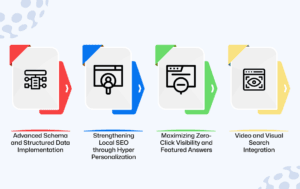
1. Advanced Schema and Structured Data Implementation
When search engines look at a website, structured data enables them to interpret its meaning. Schema types like FAQ, Article, Person and Speakable help search engines decipher information more effectively.
This keeps it from being used as a ranking factor and allows AI systems to pull the answer more easily. This enhances the visibility in featured snippets, voice address results, and AI generated summaries.
2. Maximizing Zero-Click Visibility and Featured Answers
Zero-click searches are when users have their answers on the results page without the need of a website. There’s still a way for businesses to capitalize, becoming the source of those answers.
The writing format can be structured in bite-size answer(s) sections that are often 40 to 60 words long for search engines, large language models (LLMs) and gen AI systems to find answers easily. The answer blocks do improve chances of showing up in featured snippets and result fragments.
3. Strengthening Local SEO through Hyper Personalization
With mobile devices and voice assistants taking over, local search continues to expand as consumers seek services close by. Businesses should keep their Google Business Profiles accurate and create location-specific landing pages.
The inclusion of localized keywords, customer reviews & updated business info boosts credibility and visibility in regional search results. This combines to help companies scoop up high-intent traffic from surrounding users.
4. Video and Visual Search Integration
Images and videos have become a common feature of search results on the leading search engines. Descriptive file names, captions, and transcripts not only make visual content optimized for accessibility but also help search systems understand multimedia content.
For example, businesses in the top-shelf goods sector that embed optimally designed visual assets across their website can show up in multimodal search results. This enhances discoverability on video platforms, picture searches and AI powered search interfaces.
Conclusion
SEO in 2026 needs to move away from those tactics of ranking at any cost to a focus on authority and trust. The businesses that use structured data, credible expertise and AI friendly content structures will win for meaning in modern search environments.
Aqlix IT Solutions aids organizations with sophisticated SEO analysis, AI ready content strategies, and scalable digital solutions. Long-term search visibility is served best with a disciplined model that integrates technical development, content expertise and machine learning-driven insights.
Frequently Asked Questions
What is Generative Engine Optimization
Generative Engine Optimization has to do with optimizing content, so AI powered search engines can refer it upon producing answers. Rather than simply seeking to boost rankings, GEO creates content that is clear, formatted and authoritative enough to be a source in both conversational search results and AI summaries.
How does entity based SEO differ from traditional SEO
Conventional SEO works by matching keywords with search queries. Entity driven SEO is about defining brands/ concepts and their relationships. This way, context is clear for search engines and increases the chance a brand appears in knowledge panels and AI generated outputs.
Why is structured data important for SEO in 2026
Structured data enables search engines to better understand content. Schema markup makes websites machine readable, which allows search engines and AI system to extract information in no time. This increases the likelihood of being included in rich results, voice search responses, and featured snippets.
How does video optimization help search visibility
Optimization of video content provides improved discoverability on multimedia search engines. Including transcripts and metadata, along with descriptive titles, allows search engines to better comprehend the information contained within videos. This enables businesses to show up in video results, image search results and AI visual discovery tools.
What metrics should businesses track for modern SEO
Brands should track brand mentions, citations of AI, engagement metrics and assisted conversions. And these metrics show not only how frequently a brand is shown as an authority but also highlight visibility in search plays a role in the customer journey, rather than just clicks and rankings.