

In 2026, the digital economy is zooming and fast! Due to this pressure, the growing demand for fast-launching websites & applications delivering secure and scalable digital experiences is always present. This proves tough for web development teams to strike, as modern platforms are complex systems with continual updates. With competition rising, it has become difficult for organizations to keep balance between speed and quality.
Simultaneously, the world of web development is changing. AI, machine learning, and automation tools are revolutionizing the way software systems are both developed and maintained. Rather than writing each line of code by hand, developers today work with AI systems that help them out with things like architecture, optimization and testing.
Why AI is the New Standard
So, welcome A to the new family of modern development environments. These AI tools can help out with the tasks by automating repetitive processes, helping with decision-making during development and improving the performance of an application. So these tools are helping make it easier for teams to power systems as digital platforms become increasingly complex.
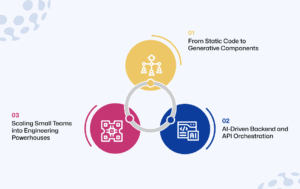
1. From Static Code to Generative Components
Web development as we know it is a manual one, writing HTML, CSS and JavaScript by hand. This provides flexibility, but when teams are building large applications this can slow down development cycles.
AI-powered development tools can automatically generate reusable interface components. This scanning parses design templates to identify and generate structured UI components that adhere to project standards.
2. AI-Driven Backend and API Orchestration
Modern websites often depend on back-end services that communicate via application programming interfaces. Managing the databases individually can become complex for applications that work with several databases and microservices.
Backend orchestration powered by AI enables entrepreneurs to automate processes such as monitoring system performance, balancing load among different servers and detecting bottlenecks in communication. Karls stated that these capabilities enhanced reliability and reduced operational complexity.
3. Scaling Small Teams into Engineering Powerhouses
AI in web development can certainly give the organization a high level of convenience, but perhaps the most important contribution comes from how it boosts team productivity. Engineering departments can now be significantly smaller while still working on projects that used to require larger teams.
AI-enabled development platforms empower organizations to comply with coding standards while increasing overall efficiency. There, companies like Aqlix IT Solutions are testing out structured methods in this instance the use of AI tools by developers to innovate capacity while still preserving a human component.
Practical AI Implementation
And while artificial intelligence is given a lot of attention in theoretical terms, the tangible value comes in practical development settings. AI-based tools are being integrated into mundane tasks like UI design, application testing, tuning system performance etc.
1. Real-Time UI and UX Personalization
User expectations from digital platforms are always changing. Users expect websites to conform to their preferences, habits, and usage patterns from devices!
Such adjustments build up a personalized browsing experience. Gradually, personalization also enhances user engagement since guests engage with material that reflects their interests and requirements.
2. Automated Testing and Self-Healing Code
The software testing process has traditionally been a time-consuming effort that compels developers to manually verify different scenarios. As applications become larger, it is becoming harder and harder to test every interaction.
These AI-based testing systems have the capability of monitoring applications around the clock and can identify anomalies in how the system functions. These tools can spot security vulnerabilities, broken features or unusual performance patterns.
3. Predictive Speed and Asset Optimization
There will always be a constant for the web-and it is website performance. Never underestimate the impact of slow-loading pages resulting in high bounce rates and users losing interest.
Machine learning can also provide predictive analytics, analyzing traffic patterns and giving insight into potential performance issues before they happen. These systems enhance image compression, script loading, and content delivery techniques to achieve a faster-paced website.
4. Integrating Natural Language Navigation
Website navigation is slowly moving towards more conversational experiences. In fact, many users now communicate with digital platforms via search queries, chatbots or voice commands and avoid navigating through complex menus.
Natural language processing technologies enable users to speak simple questions or commands to websites. Rather than scrolling through several pages, users ask for information outright.
The Future Risks and Long-Term Growth
How AI is transforming the web development world for NAP into more depth. While AI is delivering efficiencies and scale, organizations need to ensure these systems are being worked responsibly.
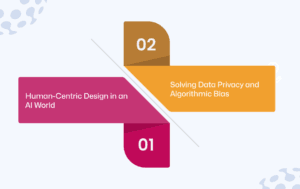
1. Human-Centric Design in an AI World
AI systems may be capable of creating design elements quickly, yet these machine outputs lack the emotional or cultural nuance that humans possess. Digital assets will require user experience design decisions to still keep accessibility, usability, and brand identity on the table.
This opens the door for human designers to drive AI solutions. They confirm that the design recommendations generated by automation align with real user expectations and long-term business goals.
2. Solving Data Privacy and Algorithmic Bias
AI-based systems train machine learning models on large datasets. This leads to significant concerns surrounding data privacy, the ethical usage of AI, and adherence to international regulations.
2026: Countries and regulatory agencies implement stricter rules on data privacy and algorithm transparency. To continue to enjoy the benefits of AI-enabled transformation in ways that users can trust, there is a need for transparent controls and data governance practices.
Conclusion
AI has already started to reshape how most modern websites and apps can be built. AI tools have helped create smarter, adaptive platforms that can, for example, generate your next component automatically or predict performance.
Groups ready to scrutinize their developmental processes and implement AI in a conscientious manner can sustain drastic efficiency improvements alongside heightened scalability. Learn about exploring opportunities at Aqlix IT Solutions.
FAQs
How does AI help web developers work faster?
AI helps developers to automate mundane tasks, from writing boilerplate code and running tests to finding bugs. Automation is a tool to remove the very laborious work so developers can focus on problems, planning architecture and embedding better functionality into digital applications.
What role does machine learning play in web development?
Machine learning processes huge data sets to identify patterns in the behavior of end-users or a web application’s performance. This enables developers to create user interfaces that are specific to the user, increase application efficiency and detect security issues earlier.
Can AI replace web developers in the future?
AI has actually been developed to augment, not replace developers. While repetitive tasks can be automated, software development projects always require developers to architect the system, creatively make design decisions or solve an intricate problem.
Is AI-based web development secure?
AI tools can identify application vulnerabilities and monitor the behavior of applications continually. For one, developers still must employ good hygiene when coding and vet AI-generated code on their own, making sure applications comply with current security and compliance baselines.