

Every digital project that gets to the finish line starts with a simple idea a concept one will use to make a process easier; or change the whole industry. But turning that vision into a product that can scale and make money takes a combination of smart planning, technical know-how and using the right development process. There are a lot of startsups that have the vision and energy but find it difficult to wade through the technical decisions, market pressures and product complexity as the company scales.
Here is exactly where Aqlix IT Solutions will make a difference. Aqlix combines the best practices of digital transformation with consulting, technical and software development knowledge to assist start-ups in realizing their ideas and transforming them into high performance, scalable solutions. Startups are offered end-to-end assistance from initial concept validation to post-launch fine tuning along their journey.
Journey to the Startup: Idea to Scaleable Offering
Creating a digital product is multi-step journey that involves clarity, flexibility and constant re-aligning with the market. Although every start-up’s path is unique, the majority of successful products pass through these stages.
At each of the stages mentioned below, it is important to reduce risk, make better decisions and scale your product in a sustainable fashion. Rather than hastily developing, process discipline and iterations guarantee that technology is only applied where it brings true value.
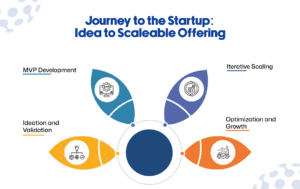
1. Ideation and Validation
The first signpost is to define what the problem is and worth solving. This would involve identifying the target audience, confirming that the problem really does exist and knowing how users currently solve it. Market research, interviews and concept testing help to shape the idea before one line of code is written. Good validation avoids building the wrong thing and makes sure you’re building what your users tell you they really want.
2. MVP Development
Once validated, the focus turns towards the development of a Minimum Viable Product (MVP). MVP is not just a simple prototype but rather a workable version of the product with a bare minimum features to start testing early. The idea is to go live as soon as you can, get feedback from users and test product–market fit. Startups conserve time and investment by validating assumptions before adding to the feature set.
3. Iterative Scaling
The product grows once feedback from first movers starts coming in. New features are added that reflect real usage. Ineffective workflows are revised and usability enhancements are implemented to enhance customer satisfaction. Here performance and technical architecture play a role this is where the system needs to cater for more demand as the number of user grows.
4. Optimization and Growth
The last step is turning a growing product into an enduring platform. This consists of adoption of cloud-native systems, use of automation and analytics for anticipating demand and improving decision-making. And as the product scales, the focus changes to scale, security, efficiency and maintaining users. With ongoing optimization and testing, the result is a ready-to-use digital solution that can scale to new markets or adoption journeys.
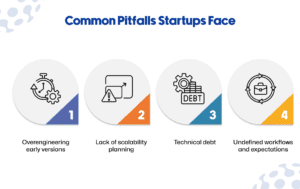
Common Pitfalls Startups Face
Even with a good idea, startups invariably face product execution challenges. The most common challenges include:
- Overengineering early versions
Founders are often trying to create a perfect product out the gate instead of having something that is minimally viable. This results in extended development cycles and delayed market introduction.
- Lack of scalability planning
There’s just no substitute for a scalable product! Non-scalable products have these scalability blues as traffic grows. Going back to rebuild a product is costly and time-consuming.
- Technical debt
Unstyled and rush development result in code that suffers from buried issues in the code or in architecture, these issues can become very costly to fix down the road.
- Undefined workflows and expectations
Unless business and technology teams communicate clearly, desired features can be lost in translation, misunderstood or delayed.
Working with knowledgeable technology experts like Aqlix reduces this risk by integrating business considerations in the technical decision-making process from project outset. By using a disciplined approach to development and by keeping the digital transformation top of mind, startups prepare to be both lean and scalable.
Aqlix’s Approach to Product Development
Aqlix operates with a community-based approach to product development based on transparency, communication and scalability. Each phase is intended to establish that you are fulfilling user requirements, mitigate risk and establish a foundation for future growth.
Agile and collaborative methodology
Aqlix applies agile principles, which involve short development cycles and both continuous and incremental quality improvements. This makes certain that product decisions are never based on assumptions and always grounded in real usage data.
Emphasises Usability, Performance and Scalability.
User experience is still a key focus but this new platform puts equal emphasis on speed, security and technical sustainability. After all, the aim is not only to develop a product that works today but one that remains scalable even as users and transaction volume goes up.
Technology expertise across modern stacks
Learn Aqlix offers practical training in AI, automation, SaaS architectures, data analytics and cloud-native development. This means startups get advice not only on building features, but also on choosing the right technologies to prioritize roadmap objectives.
Success Snapshot
Here is a simpler example to explain the evolution. Aqiix was pitched to a founder with an idea for releasing an application focused on work force management solutions for mid-size businesses. Following validation and prototyping, an MVP was piloted with a small target audience. Following feedback, the platform developed into a modular SaaS solution with cloud scalability and predictive scheduling, and include integrated reporting.
In 18 months the product was growing across industries and successfully serving an amount of users that were similar to its existing ones. Its exponential growth was made possible by the fact that scalability and sustainability were hardwired into it from its inception rather than smoked in as a second thought many years after.
Conclusion
Getting an idea off the ground is important, but founders drive to build a product that only becomes more valuable as more people use it. For a digital product to scale, one needs thoughtful planning, good market fit, user experience design centred on the user experience and technology builds.
Aqlix IT Solutions provides end-to-end support throughout this journey through a mix of technology consulting, custom software development and digital transformation strategy so that Startups can start with an idea and go all the way to market. Using structured methodologies and new, state of the art development processes, Aqlix Victoria makes certain its clients trust in delivering not only high quality solutions but long-term support and advice ahead of any technical conundrums which may come up.
Frequently Asked Questions
Why Startups Need Technology Consulting?
Walking forward and looking ahead With a hint to technology consulting the business goals and technical decisions can be matched up. This avoids wasteful development costs and places a strong base for long term scalability.
How much time is required to develop an MVP?
Timelines depend on complexity but most MVPs can be released in several months as long as the project scope is well known and development follows agile methodologies.
What makes a product scalable?
A scalable product continues to function well as the number of users increases. Scalable architecture, automation, cloud infrastructure and data-driven improvements drive toward this goal.
Can Aqlix help my company through both developing and implementing a growth strategy?
Yes. Aqlix IT Solutions supports startups at every stage – from developing an idea and product, to long-term optimization and digital transformation.
Which industries can custom software development be the best suitet for?
It can help any industry that needs custom workflows or digital efficiency. Fintech, education, logistics, retail and SaaS-based business models: If you fit any of these categories that this includes then it’s probably for you.