

Cloud computing has transformed the way businesses architect, design and scale digital products. Today, high-performance cloud apps are no longer a luxury, they’re the norm. They are needed to provide a quality service, enable growth, and keep up with evolving user wants. It’s a must-read for business owners, IT directors, and product managers, as learning how to build cloud-native systems is key to longevity.
This blog series describes the principles, technologies and obstacles that anyone will face while developing high-performance cloud applications. It also demonstrates ways in which organizations can harmonize cloud strategy with broader aspirations, like SaaS development and digital transformation.
Core Principles of Cloud Application Design
Building successful cloud applications begins with a solid architectural foundation. The Guiding Principles are as follows that teams use to construct systems that work well in production.
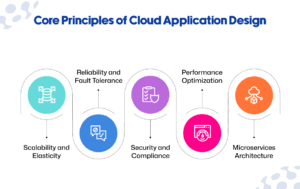
1. Scalability and Elasticity
The elasticity allows the applications on the cloud to expand to cater for heavier workloads without sacrificing performance. Resources are elastic they grow and shrink in response to demand.
Teams can ensure a consistent performance for cloud applications with user growth, seasonal spikes and unpredictable traffic by architecting for horizontal scaling.
2. Reliability and Fault Tolerance
Fault tolerance ensures that applications continue to function despite a failure of the constituent components. Workload is distributed among several services and regions to ensure fault tolerance.
Success in cloud-based applications is predicated on redundancy, automated recovery, and monitoring, leading to low downtime and maintained service continuity.
3. Security and Compliance
Cloud Security is one of the most prominent concerns in cloud-based SaaS development due to the multitenant delivery model. Apps need to be able to secure data, control access and comply with regulations.
Facilitated cloud applications leverage identity management, encryption and compliance controls that are baked in from the outset rather than bolted on after the fact.
4. Performance Optimization
Performance tuning works toward minimizing time and response times. This encompasses data handling, caching, and API development optimization.
Responsive, well-architected cloud applications have a speed that’s consistent all around the globe, regardless of geography and devices.
5. Microservices Architecture
Microservices are a method of breaking down applications into smaller components (often referred to as services) and can stand alone. All services can be built, deployed and scaled independently.
This design strategy adds to maintenance and enables you to update the system more quickly, so it is a popular choice for new-age cloud applications and SaaS platforms.
Key Technologies for High-Performance Cloud Apps
Application performance and scalability can also be largely affected by the technologies used. Choosing the right set of tools empowers teams to create adaptable and forward-thinking systems.
1. Cloud Platforms (AWS, Azure, Google cloud)
Key cloud platforms offer infrastructure and managed services to ease deployment and scaling. Operation complexity is further lowered by infrastructure-as-a-service and platform-as-a-service features.
These services allow worldwide presence when a customer deploys in multiple regions around the world, and are designed to deliver high bandwidth (multiple terabits per second) across all regions.
2. DevOps and CI/CD Practices
DevOps processes combine development and operations to enable a more seamless and faster delivery. CI and CD automate testing and releasing.
For cloud-based apps, CI/CD pipelines minimize errors while helping teams ship updates quickly and without bothering end users.
3. Containerization and Orchestration
Containers encapsulate the applications with their requirements, helping to maintain consistency wherever they run. Docker and Kubernetes are great tools for that, it allows more efficient orchestration of resources and scale.
Thanks to containerization, it’s easy to move things around and more efficiently utilize resources, facilitating them to better manage sophisticated SaaS development environments.
How Cloud Applications Support Entrepreneurial Growth
Cloud apps are very important when it comes to helping entrepreneurs get their digital products up and running smoothly. Cloud services, by abstracting away infrastructure complexity, enable founders to innovate and serve their customers and business model rather than servers.
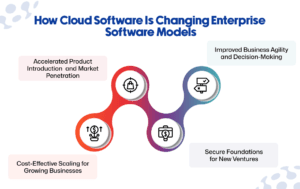
- Accelerated Product Introduction and Market Penetration: Cloud applications allow entrepreneurs to develop new apps faster with usable platforms and development tools. This speed also makes the startup possible, to test ideas, validate demand and iterate based on what sort of market change without long gestational development and/or large up front bets.
- Cost-Effective Scaling for Growing Businesses: In cloud-based models, entrepreneurs need only pay for the resources they actually use. Cloud applications such as Infuionsoft can scale automatically and thereby help businesses grow while ensuring predictable and manageable costs in both start up and expansion phases.
- Improved Business Agility and Decision-Making: Cloud applications support on-demand data, analysis and performance metrics. With the ability to track user actions, refine services and rapidly make more informed decisions, entrepreneurs can now iterate while gradually improving themselves and solidifying their businesses.
- Secure Foundations for New Ventures: Today’s cloud apps have security, compliance and backup built right in. These capabilities enable companies to safeguard customer data, comply with regulations and assure customers’ trust without having to heavily invest in security infrastructure.
Benefits of High-Performance Cloud Applications
Investment in this performance-oriented cloud design provides tangible business and technical value.
1. Faster Time to Market
By developing the cloud-native way, teams can launch new functionality and updates at speed. Development time is reduced by the aid of automation and modular architectures.
“Speedier delivery enables better response to what’s happening in the market and feedback from users.”
2. Enhanced User Experience
Performance directly impacts user satisfaction. Faster loading times and availability mean less downtime to experience and hey, let’s be realistic: user requests are even more easily handled.
Better reliability and faster performance lead to increased engagement and trust throughout digital environments.
3. Cost Efficiency
Cloud-based applications maximize resource utilization through dynamic scaling. Never pay for capacity you are not using. Organizations only pay for what they use and don’t have to provision in advance for spikes in demand.
This “productivity in a box” places sustainability at the heart of growth and keeps operational costs in check for digital transformation users.
Aqlix’s Expertise in Cloud Applications
Aqlix IT Solutions develops enterprise-grade scalable cloud applications tailored to the business requirements. They distinguish their work by blending architecture best practices with specialism in SaaS development and a long-term orientation around digital transformation.
Aqlix is about putting the focus on performance, security and manageability because Aqlix wants to help organizations grow by taking advantage of cloud solutions without sacrificing the stability. Teams get organization design, state-of-the-art tooling and several years of experience in different industries.
Conclusion
Modern digital services rely on high-performance cloud applications. They make scaling easier, provide a better user experience, and support ongoing innovation. By adhering to best practices in software design and using the right technologies, businesses have the power to create systems that will stand up under pressures.
Organizations can unlock long-term value by taking a disciplined approach to cloud architecture and digital transformation. Aqlix facilitates this transformation by enabling businesses to architect cloud solutions that meet performance requirements of today while readying them for future scale.
Frequently Asked Questions
What is a high-performance cloud application?
High-performance cloud application High performance in terms of response time, high availability and scalability to different workloads is desired in a cloud setting. Leveraging optimized architectures, automated scaling and efficient infrastructure to ensure consistent user experience.
What is the role of microservices in cloud applications?
Microservices extend flexibility by individualizing growth and scale for each service as per requirements. This architecture lends itself to more frequent updates, simplified maintainability and improved failure isolation in cloud and SaaS development projects.
What do cloud services contribute to digital transformation?
Cloud providers give access to scalable infrastructure, managed services and global reach. These features enable organizations to renovate/upgrade existing systems, improve agility, and put digital transformation projects into action without massive financial outlay.
How important is security in the design of cloud applications?
Keeping the data safe, compliance with regulations and user trust is possible through security. Well architected solutions in the cloud provides access control, encryption and monitoring built in to protect systems through their lifecycle.
How Do Companies Conserve Performance as Cloud Apps Grow?
Performance monitoring, load testing, and 24/7 optimization are performance management. Scale with an account-centric approach Automated and analystic tools ensure business performance as cloud applications expand.