

Enterprise data is often trapped in siloed systems that are not conducive to AI. Conventional AI adoption typically needs complex infrastructure modifications and lengthy growth cycles. To that end, Oracle APEX is responding to this challenge by maturing as a data, applications and AI models integration platform.
Oracle APEX is enabling organizations to develop intelligent applications at scale with lower complexity. There are already companies, like Aqlix that allow businesses to take advantage of this approach with little reorganization of their enterprise systems into scalable AI powered web platforms.
Why Oracle APEX is the Ideal Engine for AI
It also offers faster development cycles, secure data handling and flexible integration capabilities. This feature makes Oracle APEX an ideal solution for organizations that want to include machine learning and AI capabilities in enterprise applications.
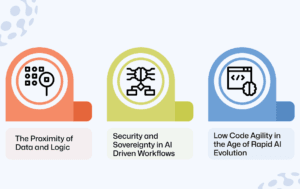
1. The Proximity of Data and Logic
Data centric architecture is one of the core foundations behind the success of Oracle APEX. Applications work directly on the Oracle database, enabling AI models to access data without moving from one place unnecessarily.
Keeping this data close reduces latency and increases the accuracy of machine learning predictions. Processing data closer to its source allows businesses to build applications that offer quicker analytics and more reliable results in real time settings.
2. Security and Sovereignty in AI Driven Workflows
AI solutions that process sensitive data raise security concerns. To manage access to applications and data, Oracle APEX utilizes enterprise grade authentication and authorization mechanisms.
Such built in security features guarantee that AI systems work inside settled administration structures. It means organizations can deploy AI driven workflows with confidence that they are compliant to data protection standards and their own internal security policies.
3. Low Code Agility in the Age of Rapid AI Evolution
Artificial intelligence technologies are evolving rapidly, and you need platforms that can pivot in a similar fashion. APEX is a declarative dev environment making it easier for you to integrate new AI models and services.
Also allows developers to easily communicate with external APIs, modify workflows and involve modern technologies without rewriting most parts of the application. This level of flexibility allows organizations to stay on top of the most cutting-edge developments in machine learning and generative AI.
Technical Integration of AI into APEX Apps
It can lead to intelligent applications that automate processes, enhance decision making, and provide hyper-personalized user experience for organizations adhering to best practices.
1. Utilizing REST Data Sources for LLM Integration
It serves as a bridge to external AI services like chat GPTs and large language models, as it allows communication for APEX applications with REST data sources. APIs can be configured by developers to send and receive data for a task, such as text generation, summarization or sentiment analysis.
This fusion allows applications to analyze unstructured data and provide intelligent responses. REST based connectivity proves to be flexible irrespective of AI provider or technology changes.
2. Implementing Vector Search for Retrieval Augmented Generation
Some modern AI applications need to understand the context of enterprise data. Oracle Database ai brings its vector search capabilities to support retrieval augmented generation.
Applications can then query the database in real-time for relevant data points by storing these embeddings inside the database. As a result, AI models can produce much more relevant and contextually accurate responses utilizing internal business data instead of being restricted to outside sources of information.
3. Building Intelligent Natural Language Interfaces
Natural language interfaces make the way users interact with enterprise applications much easier. With Oracle APEX, developers can build user interfaces that allow them to submit queries in simple sentences rather than complex command lines.
They also provide better accessibility for non technical users and a reduction in manual reporting processes. Chat based interactions and conversational dashboards make it easier to navigate through data quickly, intuitively and effectively.
Maximizing ROI and Managing Implementation
The challenge lies in measures of success, and like everything else experience with implementation. A well-defined strategy ensures that the adoption of AI brings tangible business value.
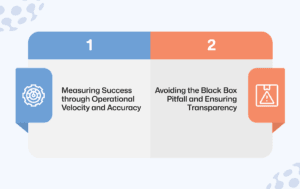
1. Measuring Success through Operational Velocity and Accuracy
AI-enhanced apps can be measured through operational efficiency and speed of decision making. AI helps eliminate manual data entry and processing time.
By predicting accurately and automating workflows, better use of resources. By monitoring these metrics, organizations can assess the ROI and identify areas for further optimization.
2. Avoiding the Black Box Pitfall and Ensuring Transparency
AI systems sometimes return outputs that are difficult to interpret, known as the black box problem. Organizations have to create transparent workflows and validation mechanisms in order to settle this issue.
This includes human in the loop processes that ensure that the AI generated results are verified by end users before execution. This allows safeguarding against errors making sure the decisions taken by AI remain in line with business goals and compliance needs.
Conclusion
Oracle APEX is a pragmatic approach to integrating artificial intelligence into what businesses currently have in place without the risk of total re-engineering. Its Data centric architecture, low code flexibility, and secure environment makes it well suited for building intelligent applications.
Organizations can turn data into actions by converging machine learning, automation, and scalable design. Partnering with tech providers like Aqlix can lead your business toward AI powered applications that drive sustainable change and digital transformation into the future.
Frequently Asked Questions
1. What is Oracle APEX and how does it support AI development?
Oracle APEX is a low code development platform enabling businesses to directly create web applications on an Oracle database. It aids in AI development by working with machine learning models, REST APIs, and external AI services that allows developers to build out intelligent, data driven applications quickly and seamlessly.
2. Can Oracle APEX integrate with machine learning models?
Yes, Oracle APEX has the ability to integrate with machine learning model through Oracle Machine Learning services and external APIs. Groups can integrate predictive analytics, automate workflows, and make decisions from data. This means that applications can provide advanced features like forecasting and personalized recommendations.
3. What are the benefits of using AI in Oracle APEX applications?
By providing improved automation, analytics and user interface, AI augments the power of Oracle APEX applications. AI also allows businesses to assess massive data sets, predict trends and deliver personalized content. These capabilities enable enhanced operational efficiency, decreased manual tasks and overall better decision making throughout the enterprise systems.
4. How does Oracle APEX ensure data security in AI applications?
Authentication, Authorization and Role Based Access Control are built in features that can be handled with ease using APEX. These mechanisms ensure that the AI models only query relevant data. Organizations operating in business submission software must implement effective practices for data handlings to comply with regulations while ensuring sensitive information is not accessible by unauthorized individuals.
5. Is Oracle APEX suitable for building scalable AI applications?
Built with the Oracle Database and cloud in mind, APEX is a superb platform for scalable AI applications. It supports high-performance data processing and flexible architecture. As data volumes increased, businesses can scale applications while ensuring AI driven workflows continue to perform and remain reliable.