
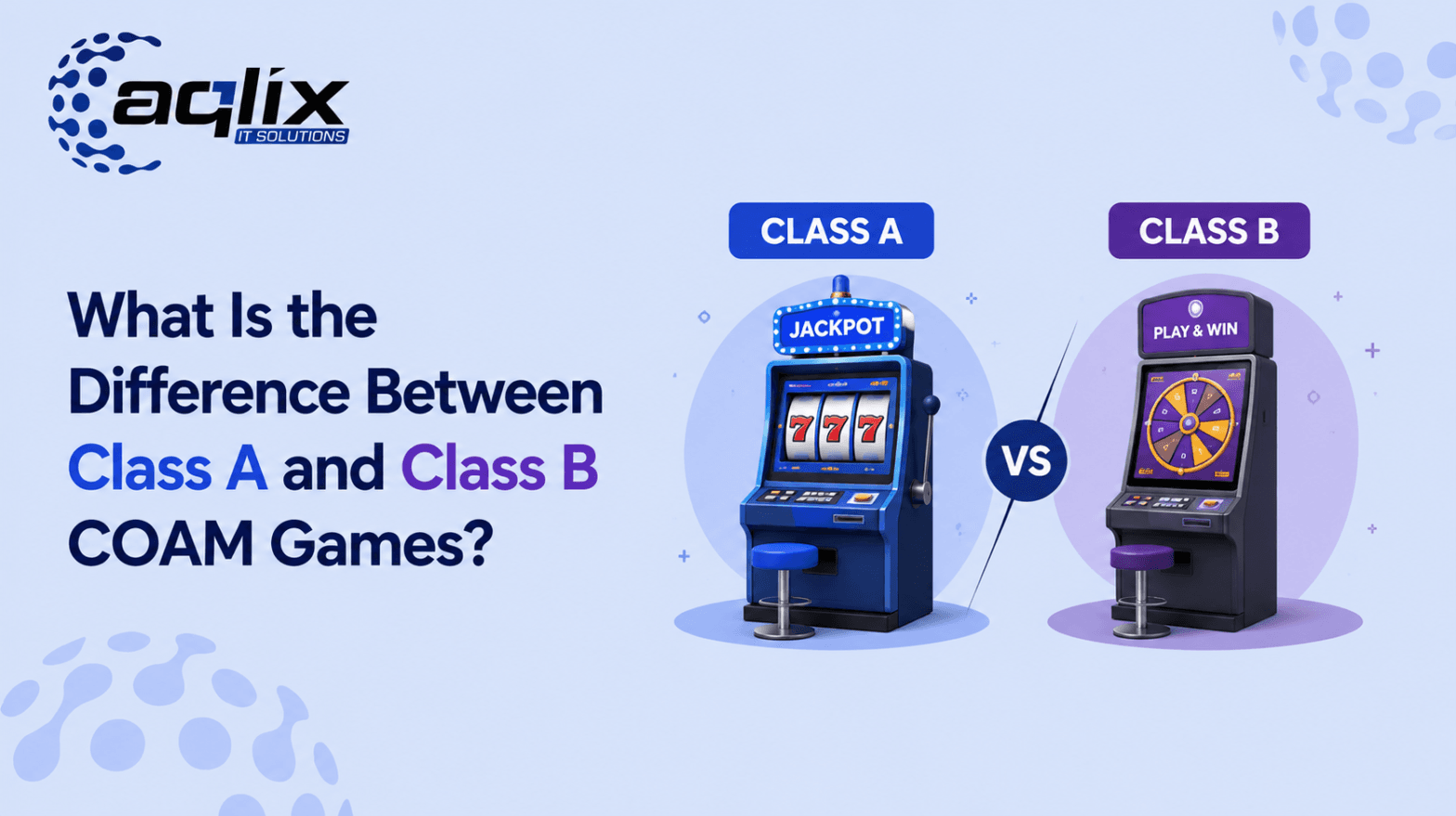

Class A and Class B Coin Operated Amusement Machines (COAM): Many Georgia COAM Operators, Location Owners, and Route Operators don’t know the difference between Class A and compliance challenges, and operational risks can arise from wrong machine type choices or misunderstanding regulatory requirements Learning these classifications is vital for COAM compliance and appropriate deployment of machines.
With advancements in Georgia’s COAM industry, operators are also implementing technology-led processes for enhanced monitoring and reporting. Aqlix IT Solutions organizes the documentation and assets and manages compliance workflows for businesses, which makes them easier to operate under Georgia Lottery regulations while improving operation efficiency.
Understanding Class A and Class B COAM Game Classifications
Before operators can properly run compliance, they should have a basic grasp on the differences between Class A and Class B COAM games. Each classification has a distinct role and different dynamic regulatory requirements that affect operations.
1. What Are Class A COAM Games?
Type A COAM games are typically coin-operated amusement machines that do not provide cash prizes or reward tokens with redeemable value. These machines are mainly for a recreational facet and enforcement is quite different. While this article is meant for Georgia COAM operators, understanding the permitted features and operational limitations of your Class A machine is vital to both regulatory compliance and avoidance of a compliance headache.
2. What Are Class B COAM Games?
Amusement machines convey qualifying prizes on all events under applicable Georgia Lottery regulations. Due to the prize redemption aspect and more scrutiny from regulators, operators must carefully ensure compliance. Class B machines are perfect for a multi-business site company, and proper documentation processes, revenue reporting, and inventory tracking become increasingly important.
3. Why Understanding the Difference Matters
The implications of misunderstanding the machine classifications can lead to operational as well as compliance risks. Operators miscategorizing assets may run into reporting, documentation and compliance audit challenges in its wake. Your knowledge about Class A and B helps nurture enhanced Compliance Management for organizations alongside assisting audit preparation while building processes to drive sustainable operations for the long run
Managing Compliance and Operations for COAM Games
After game classifications are understood by operators, they need to put systems and processes that enable compliance, reporting, and everyday management into place. Oracino provides strong operational control to mitigate risk and enhance efficiency in each of the COAM operations.
1. Track Inventory and Machine Activity Accurately
Proper COAM inventory management is important, whether Class A machines or Class B machines. A lot of records should be kept by businesses about where machines are, their service history, whether or not they are in good working order and who owns the assets. Asset tracking does 2 additional things: it also improves visibility of your assets and provides support for compliance management & audit preparation. Enterprises are slowly starting to leverage machine learning tools to spot operational patterns and orchestrate inventory planning.
2. Maintain Strong Reporting and Documentation Processes
A large part of the compliance management in COAM is done through documentation and reporting management. Operators, you need a clear set of protocols in place for revenue reporting, service records, machine inspections and operational changes. Documentation that is done the same way each time can better support regulatory reviews and increased transparency for the business. Machine learning technologies are taking their place in helping organizations notice anomalies in reporting and assist data-driven operational resolutions as they gain scale.
3. How Aqlix IT Solutions Supports COAM Operations
Through the Aqlix COAM Management Solution, Aqlix IT Solutions assists Georgia COAM operators with cumbersome compliance and operating requirements. Centralized Operations of the platform caters to documentation management, route management, service request management, revenue tracking, inventory tracking, and EFT management. Improving Operational Efficiency while strengthening COAM Compliance The use of the COAM Workflow service provides improved visibility over machine activity and compliance workflows. Besides this centralized management platform for business process improvement and operational overview, future-ready operators are also exploring machine learning capabilities.
Conclusion
Understanding the difference between Class A and Class B COAM games is important to bear in mind so you can stay compliant and make an informed decision on how best to run your operations. Different types have specific requirements that impact reporting, inventory control, documentation, and review of these businesses. COAM Operators in Georgia who establish the appropriate compliance administration are prepared to quickly handle audits and regulatory evaluations.
With Aqlix IT Solutions, organizing the documentation and reporting and inventory tracking along with operational workflows is a cakewalk, thereby paving the way towards higher operational efficiency while later integrating with aspects like machine learning-driven business insights.
FAQs
What is the primary difference between Class A and Class B COAM games?
Class A COAM machines tend to be amusement devices that do not include restrictions on payout redemption and are often thought of as traditional coin operators, while Class B COAMs offer some form of enticement (dependent on regulation) to persuade gamers to engage in play. There are different levels of compliance that come from each classification, so it is important for operators to know the rules associated with this type of machine.
Why is machine classification important for COAM operators?
Proper classification helps operators comply with Georgia Lottery regulations and avoids headaches down the line for documentation or reporting. The classification information helps in managing the compliance and audit preparations by bringing consistency in the operations. It will also help enterprises implement proper machine tracking and record-keeping processes.
How does inventory tracking support COAM compliance?
Inventory tracking is an important feature through which operators can keep track of all their records regarding machines including ownership, placement, maintenance, and operational status. Robust COAM inventory management enhances accountability, assists regulatory reviews and minimizes discrepancies during compliance audits or reporting activities.
What role does documentation play in managing COAM operations?
Documentation will serve as evidence of the proper management and operation of machines in accordance with applicable regulations. Information within your service records, from licensing, inspection reports, and revenue reporting data, not only helps the businesses provide evidence of compliance but is also a tool to help continuously manage day-to-day operations and be always ready for audits.
How does the Aqlix COAM Management Solution help operators?
The Aqlix COAM Management Solution compiles documentation management, revenue tracking, route management, and service request management work centers along with asset tracking or compliance workflows. The result is that operators will have better visibility and organization, thereby ensuring stronger COAM compliance, improving operational efficiency, and being able to track Class A and Class B machine operations more effectively.