
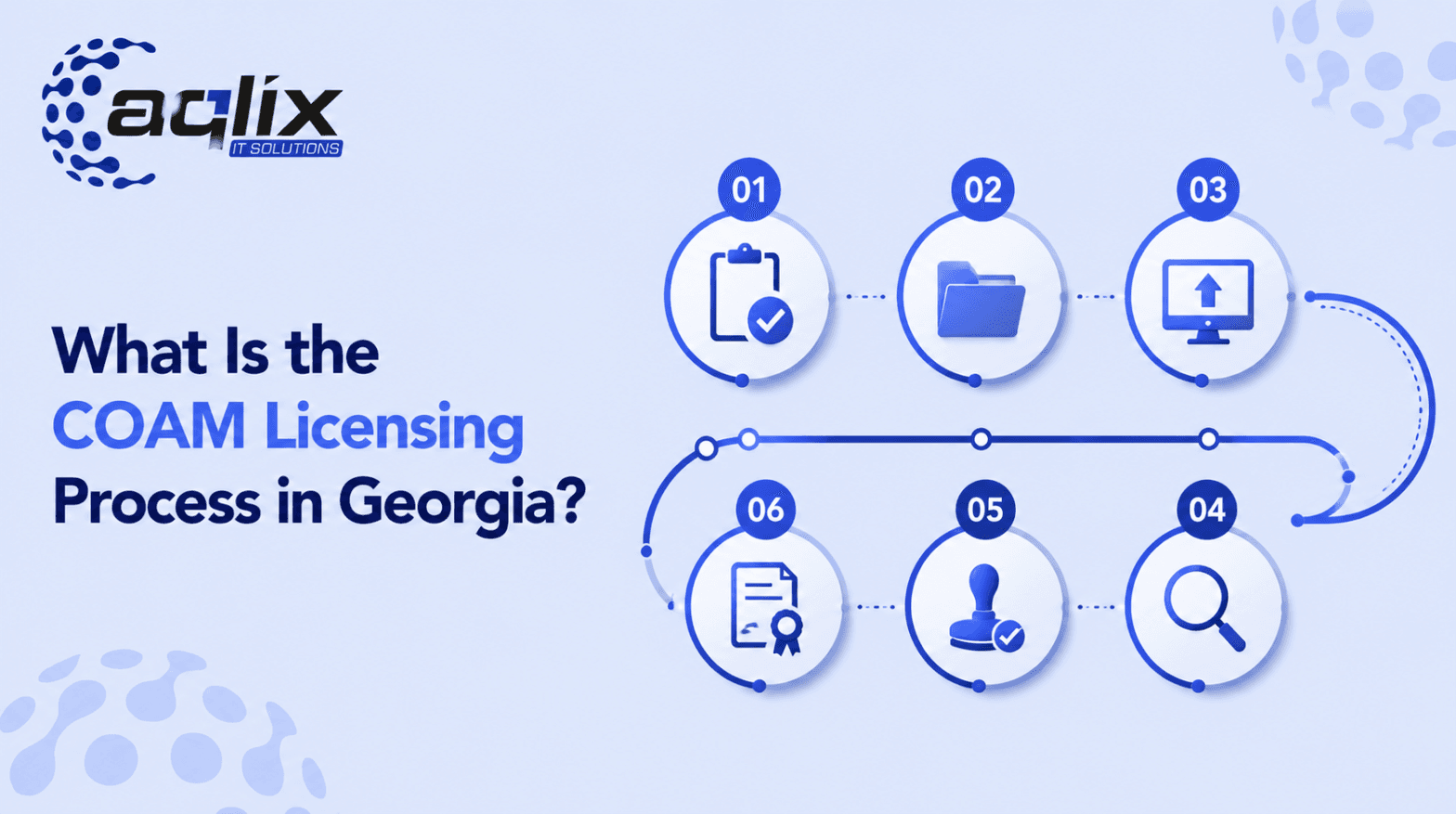

Some Georgia COAM operators are hungry to grow their business, but the question they all share is simply this: What is the COAM licensing process? From understanding eligibility requirements to gathering documentation and meeting continuous compliance obligations, the process might appear complex for novice applicants. If a requirement is missed or not all the information is provided, it will lead to either a delay in approval or further nuisance.
With the evolution of Georgia’s COAM industry, businesses are embracing digital transformation to enhance compliance and operational visibility. Aqlix IT Solutions assists with operators in streamlining their documentation, reporting, and workflow management to assist navigating the licensing requirements while establishing a compliant professional operation
Preparing for the COAM Licensing Process
Operators need to know the licensing requirements before they submit their application and have businesses organized to accommodate those business processes. Good preparation reduces delays, supports regulatory compliance, and ensures that applicants are prepared to fulfill their operational responsibilities post-approval.
1. Understand Eligibility and Licensing Requirements
So, the first thing that needs to be done in order to get a license is figuring out eligibility according to Georgia Lottery regulations. Depending on the COAM business structure, applicants could be master licensees, route operators, and location owners. Licensing process classifications, who reports directly and to whom, and even reporting itself this knowledge alerts applicants that they do not have to engage in the most common pitfalls. The earliest review of requirements provides solid ground for a positively functioning application.
2. Gather and Organize Required Documentation
Thirdly, accurate documentation is critical in the entire application process. Prepare the ownership records, business registration agreements, location agreements, monetary information and other important documents required by the own ventures. A well-documented process to provide COAM documentation not only aids in approval for licensing but also assists you in audit preparation and further streamlines compliance management at greater levels. A lot of organizations undergo digital transformation to streamline records and overcome paperwork issues.
3. Review Operational and Compliance Readiness
Many licensing process authorities require businesses to prove that their operations can start smoothly. That includes managing interactions with inventory, reporting and monitoring of machines and retention of data. Investing time to draft out the compliance management before applying is often more conducive for future compliance audits. Structured workflows enable repeatability and mitigate the risk of human error, introducing standardization to processes.
What Happens After the COAM Application Is Submitted?
Submitting an application is just one part of the grand scheme of licensing experience. Post green-light approval, operators have to be organized, respond to requests for information and prepare themselves for continued compliance-related engagements.
1. Respond Promptly to Regulatory Requests
Throughout the review process, regulators can request further details or clarifications regarding documents that have been submitted. If the response time is delayed, it can lead to lengthy approval timelines. It is so easy to provide requested information quickly when you are maintaining organized records and centralizing documentation processes. Reporting management and documentation practices lead to a smoother licensing journey and also showcase an increased efficiency on an operational front.
2. Establish Systems for Ongoing Compliance
And, once approved, operators are required to remain in compliance with reporting and obligations. for revenue reporting, asset tracking, COAM inventory management, and service request management activities. The digital transformation initiatives adopted by any business mainly enhance the accuracy of reporting and better visibility in daily operations. These practices enable risk mitigation in relation to various regulations and assist organizations in their growth trajectory.
3. How Aqlix IT Solutions Supports Licensed Operators
When businesses grow, guiding compliance requirements across several sites becomes a sipping juggernaut. The Aqlix COAM Management Solution gives Georgia COAM Operators Hassle-Free Management of Documentation Management, Route Management, Revenue Tracking, Compliance Management, Service Operations & more! It provides centralized operations & workflow automation to help organisations maintain the records and be more productive. This, even as operators have had to try and do so much more than deal with licensing into the larger digital transformation at large, preserving their operational control.
Conclusion
The requirements to secure and maintain COAM licensing in Georgia require prior preparation, accurate documentation, continuous compliance and solid operational practices. By understanding each stage of the process, businesses avoid setbacks and establish a strong base for long-term success.
Regulatory compliance is maintained through each step of application preparation, ongoing reporting, and inventory management. Aqlix IT Solutions provides operator support by reducing documentation, reporting and compliance efforts and automating workflow through the Aqlix COAM Management Solution in order to deliver business efficiencies that help businesses meet their digital transformation objectives.
FAQs
How long does the COAM licensing process take in Georgia?
When this will happen depends on the degree of completion of the application, the quality of the documentation and if regulatory review is required. Incompleteness of data or the need for more clarification adds to the time required. If, rather than having to reconcile 50+ pages of a submission with the correct location in our license terms and conditions (LTCs), you are able to organize filings and respond timely to requests for info then your licensing process will go faster without all that approval back-and-forth.
What documents are typically required for a COAM license application?
Applicants typically require business license documents, ownership details, financial statements, location contracts and other relevant documentation. Keeping organized records enhances accuracy in the reuse of applications and shows the ability to prepare for upcoming compliance. Good management of documentation also helps for upcoming audits as well as the requirement to comply with the latest regulations.
Why is compliance management important after obtaining a COAM license?
Licensing process is just the first step. It keeps operators meeting reporting, documentation, and inventory tracking as well as compliance obligations. Strong Compliance Management practices help businesses to stay audit-ready, mitigate regulatory risks and keep the operations up to scale while supporting a sustainable growth agenda over time.
How does digital transformation benefit COAM operators?
Digital transformation assists the documentation process, including raising report accuracy, centralizing operational information, and improving compliance visibility. Operators have improved control over inventory, service requests, revenue reporting and regulatory obligations. Those enhancements can result in better operational efficiency and the better running of a business.
How does the Aqlix COAM Management Solution help operators?
Aqlix COAM Management Solution allows for documentation management, compliance management, revenue tracking, route management, service request management, EFT management and asset tracking features. Centralizing these activities provides enhanced visibility into operations, compliance, and improved management of COAM operations over a large footprint.