

SaaS is no longer just a “nice-to-have” option for organizations it’s becoming the norm when building IT systems. Today’s businesses leverage SaaS platforms to optimize processes, simplify infrastructure operations, and essentially grow their agility in company-wide sections. SaaS is a great option for budding enterprises because it allows flexibility and innovation at pace, without the huge upfront cost of investing in on-premises solutions.
Cloud-medium applications facilitate remote sharing and real-time updating and are therefore indispensable tools for companies working in fast-changing environments. As digital transformation continues to surge across industries, it’s not so much a question of whether to use SaaS anymore, but how and for which applications.
How Cloud Software Is Changing Enterprise Software Models
Enterprises are moving out of legacy on-premise systems to flexible, resilient cloud-native SaaS. All these changes are being led by evolving business requirements, dispersed workforces, and the need for faster technology deployment times.
Compatibility with your enterprise ecosystem: Today, SaaS platforms seamlessly interoperate with tools enterprises are already using to embrace the new without redoing everything. Such advancement enables concerns to concentrate more on value enhancement instead of system upkeep.
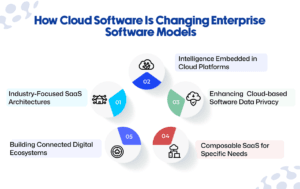
1. Intelligence Embedded in Cloud Platforms
SaaS platforms with AI technology at their core are revolutionizing how organizations work, embedding intelligence into the applications that employees use every day. Its predictive analytics, intelligent automation and machine learning driven insights enable businesses to anticipate trends and enhance decision-making accuracy.
These smart platforms minimize manual labor, enabling teams to concentrate on strategic priorities. With AI in SaaS, businesses can be more productive and have a uniform performance across all deployments.
2. Industry-Focused SaaS Architectures
These are the vertical SaaS solutions catering to industries such as health, finance, manufacturing and retail etc. Unlike general platforms, it addresses the specific regulatory, workflow and data structure elements that each industry requires.
It’s grounded in business reality Industry-vertical solutions SaaS that is targeting the industry delivers a better adoption and operational success. Faster implementation and less custom work mean faster ROI for enterprise.
3. Enhancing Cloud-based Software Data Privacy
Enterprises tidbits As enterprises shift their most sensitive data to SaaS, security and compliance continue to top the list of priorities. Today’s SaaS offerings feature sophisticated data encryption, identity management and compliance tracking to comply with global requirements for protecting sensitive data.
Cloud can dynamically update the security tools, thereby minimizing risk of aging infrastructure. This preventative stance allows businesses to continue growing their digital operations safely and securely.
4. Composable SaaS for Specific Needs
Micro-SaaS and the platformization of modularity also allow firms to incorporate specific pieces of functionality without subscribing to a megaplex. These nimble responses work well for very specific operational needs, such as billing, analytics or customer engagement.
SaaS as a Composable System: More than one model To some extent, composable systems can obviously take whatever form they like. This can help make incremental digital transformation more affordable.
5. Building Connected Digital Ecosystems
API-first SaaS Allows For Easy Integration With Legacy Business Systems Like ERP, CRM, And Analytical Tools. With this connectedness data is transparent across a company’s various divisions working to improve cooperation and visibility.
Digital ecosystems work well for organizations that need to automate and scale out. SaaS platforms that integrate tend to break down walls and create operational uniformity between business units.
Key Considerations Before Scaling SaaS Across Enterprises
Adopting SaaS does come with advantages, but organizations face challenges including integration complexity, data management and vendor lock-in. It may take a little bit of planning to migrate from legacy systems.
Employee training and change management are also instrumental to get the most out of your SaaS investment. And if companies take these concerns into account before full scale-up, they can help enterprises to avoid disruption and make their digital transitions more seamless.
Business Impact of SaaS-Driven Operations
By facilitating efficiency, scale, and especially data-driven decision-making, the adoption of SaaS provides a significant opportunity for measurable business value realization. Organizations employ cloud-based software to rapidly adapt to changing market conditions and to stabilize its operations.
Reducing reliance on physical infrastructure frees up resources for organizations to apply more strategically in support of innovation-driven growth.
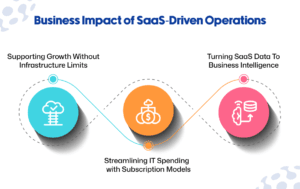
1. Supporting Growth Without Infrastructure Limits
SaaS solutions grow and scale with a business for as much capability as required, removing the requirement to purchase expensive hardware. Companies can add users, features or storage without disrupting their existing business.
This scalability allows companies to extend their market penetration and respond rapidly to evolving customer requirements, in order to sustain businesses over the long term.
2. Streamlining IT Spending with Subscription Models
The pay-per-month/month-by-month SaaS pricing model allows businesses to control their budget better. Businesses don’t need to invest in big spending blocks of capital, but they pay for what is being used, so that costs more closely match actual operating needs.
This predictable cost model means less risk on the finance side, while still having access to an enterprise-level technology platform. SaaS also reduces maintenance costs by outsourcing responsibilities to providers.
3. Turning SaaS Data To Business Intelligence
Data-driven insightsSaaS-based platforms produce essential statistics for decisions and performance control. Embedded analytics dashboards enable to monitor KPIs, detect trends and take pro-active action.
With predictive insights informed by data, companies can more accurately predict and optimize how they allocate a resource, leading to better overall business performance.
Strategic SaaS Enablement With Aqlix
Aqlix helps organizations by bridging SaaS efforts with wider digital transformation objectives. Companies are getting their needs when it comes to custom SaaS development and technology consulting solutions.
Whether you are integrating systems or optimizing the cloud, Aqlix works with businesses to deliver space and Internet systems on a SaaS platform that can support growth for years. The emphasis is on developing pragmatic, sustainable solutions that adapt to how the business changes.
Conclusion
SaaS is changing the way businesses function today with flexibility, scalability and data-driven insights. Organizations that recognize these trends and adoption challenges will be in a better position to make IT procurement decisions with as much information as possible. And with the right approach and Aqlix on your side, organizations can construct a cloud-first system to drive sustained growth for years to come.
Frequently Asked Questions
Why SaaS is Relevant for Businesses While the enterprises do business today?
SaaS offers organizations scalable, reliable and always up-to-date software without large hardware investments. It enables remote work, faster implementation and operational agility. With a lower maintenance burden and greater accessibility, it enables businesses to use software sustainably and stay competitive while adjusting swiftly to dynamic market forces.
How is SaaS an enabler for digital transformation projects?
SaaS speeds up digital transformation by streamlining workflows and giving employees the tools they need to collaborate in the cloud. It can be seamlessly integrated into the existing infrastructure and help organizations automate processes and leverage real-time data insights. This is vital for organisations who are wanting to effectively move existing infrastructures over to a digital one.
Is enterprise-level data safe on SaaS platforms?
Today’s SaaS platforms adhere to stringent security measures, such as encryption, access controls and increasingly stringent compliance certifications. Security protocols are often upgraded by providers in response to these new threats. with effective governance and vendor selection, SaaS can be as secure or more secure than on-premise alternatives Said differently, the security of your on-premises data assets will be no greater than that of your least secure SaaS app.”
How are businesses addressing the integration dilemma for SaaS?
For successful SaaS integration you need clear planning, an API capable platform and a shallow learning curve to allow for alignment with existing IT. Companies do this to minimize risk and they often use a phased migration approach. Meanwhile training and support are essential to new systems being used properly and without disruption to day-to-day operations.
How does SaaS adoption change with customizability?
Customizing also makes it possible for the enterprise to map SaaS Vista with its unique business processes. Although SaaS drives standardization, configurable processes and modular functionality provide flexibility. This blend enables organizations support special operational requirements without adding complexity.
What is Aqlix, and how does it enable organizations to adopt SaaS solutions?
Aqlix leverages the experience that entails technology consulting, in-house SaaS development and system integration customized as per enterprises and their objectives. With an emphasis on scalability, security and long-term value, Aqlix enables businesses to implement SaaS and drive sustainable digital growth.

