
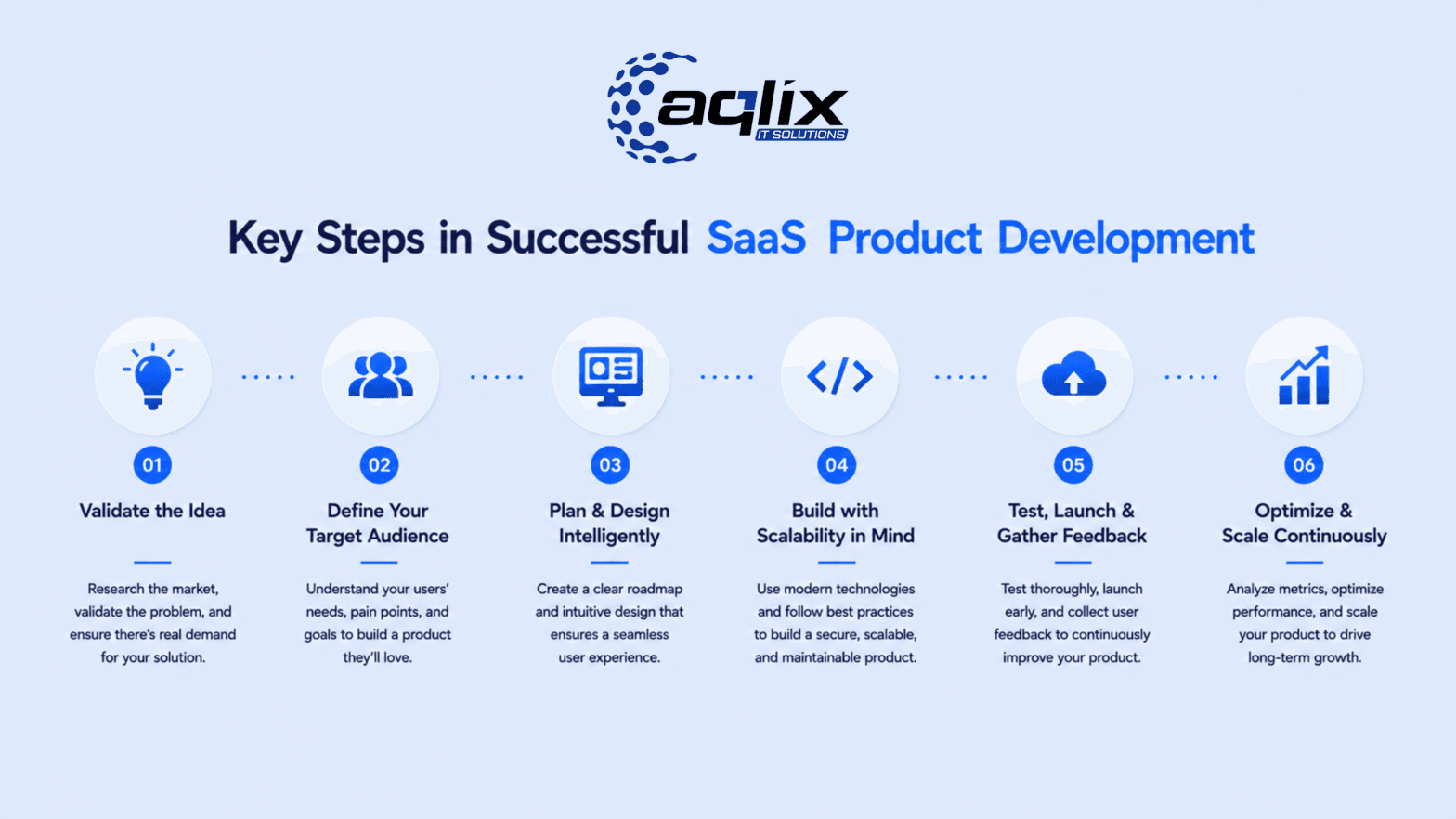

To create a SaaS product, you don´t just launch software with some basic functions. Modern businesses are starting to demand automated and scalable infrastructure, secure systems and smooth user experience along with reliable performance. Because of factors like development costs, scalability breakdowns, and poor operational workflows, many startups fail.
Even though companies have opted for in-house data till October 2023 cloud-native, automation and modular architecture are being used to scale faster into these sustainable platforms. Aqlix IT Solutions- Healthcare, Logistics, Finance & Enterprise Modernization solutions working on highly scalable cloud infrastructure and Automated deployment enabling better operational stability and software efficiency.
How to Reduce SaaS Development Costs
One of the biggest priorities for SaaS businesses stands as reducing development costs. Inefficient workflows, outdated infrastructure had caused companies to overspend through repeated manual processes. Companies that are adopting scalable technology and automating operations have better control over their expenses.
Smart ways businesses reduce SaaS costs:
- Using a cloud-based solution you do not need to maintain very expensive physical servers in their data center.
- Have CI/CD pipelines to eliminate manual testing and deployment
- Build modular applications, which will facilitate the enhancements in future
- Make coding practices between dev teams consistent.
- Unified dashboards to monitor infrastructure performance
Likewise, Aqlix powered enterprise modernization initiatives that built systems using Kubernetes-based environments and automated deployment. It allowed organizations to enhance scalability while consuming a lesser amount of operational funds.
Why SaaS Startups Fail Early
Most SaaS startups die very quickly because the entrepreneur was only paying more attention to getting their product launched instead of building systems that would allow them to grow long-tern. In the early stages of scaling, your customers lose confidence due to performance problems, poor onboarding and an unreliable infrastructure.
Common reasons SaaS startups struggle:
- Lack of scalable infrastructure during traffic growth
- Slow application performance and Downtime issues
- Complex user onboarding experience
- Poorly designed security and compliance strategies
- Inefficient workflows that delay operations
Before Aqlix, you collaborated with companies who were upgrading legacy enterprise systems through cloud-native architectures, automated deployment methodologies and secure infrastructure practices. These enhancements also aided organizations with maintaining application stability while accommodating greater workloads and operational demands.
How to Develop Scalable SaaS Software
The scalable SaaS software can help businesses manage increasing users, bigger workloads, and changing operational requirements without any impact on performance. And modern SaaS platforms require more flexibility, automation and infrastructure management.
Key practices for scalable SaaS development:
- Kubernetes and containerization as workload management
- Develop applications based on modular architecture.
- Improve the reliability of your releases by automating deployments
- More secure APIs to better handle communication system.
- Continuously monitor application health and infrastructure performance
Aqlix transformed healthcare and warehouse management platforms by migrating old systems to modern, cloud-native environments. These implementations supported secure digital transformation strategies and improved deployment speed, uptime reliability and operational scalability.
Best Cloud Solutions for SaaS
Cloud technology is at the heart of the modern SaaS landscape. Cloud Infrastructure Utilization Overview Businesses use Cloud infrastructures to improve scale, reduce risks related to operation management, and maintain software environments that are relatively stable.
Popular cloud solutions businesses are adopting
- Cloud environments that enable automated scaling using Kubernetes
- Strategies for deploying multi-cloud for improved reliability
- Centralized Monitoring Dashboards for Operational Visibility
- Cloud native databases- Faster speed
- Automated backup and disaster recovery systems
Cloud modernization for enterprise platforms done by Aqlix, strengthening infrastructure resilience and operational transparency. These cloud environments provided support for secure deployments including workloads that could span across healthcare, logistics and financial applications.
How to Improve SaaS Retention
Retention is key to long-term growth for SaaS. Companies which provide reliability, simplicity of workflows, and proactive-level user experience generally have higher levels of engagement and lower churn rates.
1. Effective ways to improve SaaS retention:
- Ease On-Boarding; Intuitive Navigation
- Speed and responsiveness of the platform
- Look into analytics tools to learn how users behave
- Keep uptime using an automated monitoring system
- Improve security practices to earn customer confidence
Aqlix continued to build customer portals and workflow automation systems that provided greater usability or operational efficiency in many industries. With fortified workflow and streamlined navigation, businesses developed efficient workflows that enabled secure login systems, and improved customer engagement amongst consumers on the platform.
2. How to Operate the Businesses Behind SaaS Growth
Strong operational strategies are as vital as development and infrastructure for ensuring long-term performance of SaaS businesses. Corporate visibility centre and automating repetitive tasks strive to instil the process of operational excellence.
3. Operational improvements businesses are implementing:
- The infrastructure dashboard for monitoring is centralized
- Workflow management and automated reporting
- Standardised deployment and testing processes
- Alerts and measures of performance system in real time
- Secure application-to-application integrations
At Aqlix we used to enable logistics and healthcare organizations with on demand workflow optimization systems, automated production environments deployment pipelines along with centralized operational monitoring. Those improvements not only cut delays but also made software more stable, driving better overall business efficiency.
Conclusion
Successful SaaS product building relies on scalability, automation, security and operational availability. Companies building their cloud-native infrastructure and workflow optimisations, making deployments modern code deployments will be well on track for long-term growth, and traction with customers. Implemented enterprise modernization projects including Kubernetes infrastructure, automated CI/CD pipelines, cloud migration and deployment of secure customer portals that enhanced software scalability, operational performance and business continuity across industries at Aqlix IT Solutions.
FAQs
What is the biggest challenge in SaaS development?
Another significant problem with a SaaS project is making sure the system has enough scalability and security at any time. Increasing workloads that applications fail to balance and manage everywhere is a common cause of operational problems in businesses. Adapting Cloud-native infrastructure Modular Architecture Automated deployment practices help organizations achieve operational stability and improve the scalability of software systems in the long-run.
How can SaaS companies lower development expenses?
Automation of repetitive processes, cloud infrastructure utilization and standardized workflows help businesses lower their SaaS development costs. Using CI CD pipelines so you would have modular application design and centralized monitoring lessens maintenance complexity, thus improving deployment ability. These strategies allow organizations to balance the operational costs with the regular product improvements and scalability.
Why is cloud infrastructure important for SaaS?
With cloud one can scales saas business resource smartly and It helps with improving the reliability of the software. It provides businesses with automated scaling, centralized monitoring, disaster recovery systems, and the ability to manage infrastructure flexibly. Cloud-native environments enable faster deployment and facilitate higher operational continuity during massive traffic surges and also growing the business.
How does automation improve SaaS operations?
By removing manual workloads, automation enhances SaaS operations while making consistency across development and deployment processes significantly more reliable. To reduce turnaround time and operational risks, businesses automate testing, reporting, infrastructure monitoring also deployment management. They also increase software reliability and help teams to maintain the application stable performance as well.
Why does customer retention matter in SaaS businesses?
You are relatively safe from subscriptions because it is long-term users, who bring long-term sustainable revenue. Companies with seamless onboarding, consistent application performance, and safe digital experiences will typically incur higher customer satisfaction. SaaS companies reduce customer churn and improve engagement in the long run by enhancing usability, workflow efficiency, and operational stability.