
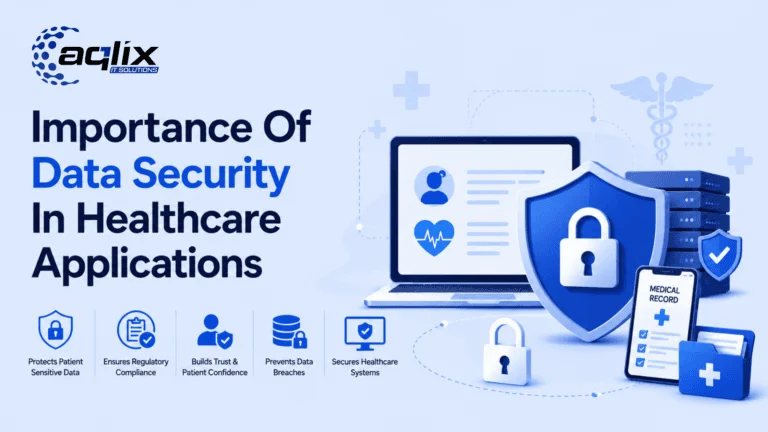

Healthcare organizations work with thousands of pieces of patient information each day. The security of patient records, insurance information, prescriptions, and billing data is essential to protect the privacy and trust of patients. However with the increasing use of telehealth, mobile apps and widespread cloud systems in healthcare applications, cyber threats have also emerged as a top concern.
A single breach in security can cause disruption of healthcare services and leak sensitive records and compliance issues. Security best practices for healthcare help organizations mitigate risk, strengthen resiliency and deliver secure digital health experiences. Aqlix – Change Agent for Healthcare Industry A cloud technology company helps to build enterprise-grade infrastructure and bring in cloud modernization capabilities complemented by application development expertise focused on the core compliance of trust, reliability, and safeguarding data.
Why Healthcare Data Security Matters
Because healthcare includes personal information, financial records and medical records, it has become one of the most targeted forms of digital products. Cybercriminals try to obtain this data via ransomware, phishing and system weaknesses. Healthcare systems need to be protected in order to preserve patient safety and the continuity of operations.
Additionally, healthcare organizations need to comply with HIPAA along with various other data privacy regulations. So secure applications enable organizations to dodge penalties and increase patient and clinician trust.
- Protection Of Sensitive Patient Information: Healthcare applications store sensitive data like prescriptions, diagnostic reports and insurance records. Properly secured systems help prevent unauthorized access to sensitive information and reduce the chances of identity theft or misuse of data.
- Compliance And Regulatory Requirements: Secure authentication, encryption and monitoring systems should now be in place to ensure that healthcare organizations can remain compliant as legitimate data professionals are forced to share more information. Such practices mitigate legal and operational risks and enhance accountability.
- Rising Healthcare Cybersecurity Threats: With the increasing digital connectivity, healthcare providers are under attack increasingly from cyber threats. Routine monitoring and effective security strategies allow organizations to recognize vulnerabilities before they can impact operations.
How To Secure Healthcare Applications
Healthcare applications need multi-layered security to secure patient records and ensure high-quality system performance. Security should be built in throughout the software development lifecycle. Aqlix serves healthcare organizations by providing secure environments for applications that enable greater reliability, scalability and readiness for compliance.
With that in mind, businesses should prioritize defending user access, the cloud infrastructure itself, APIs and healthcare databases. Also, regular monitoring and timely upgrades minimize the risk of cyberattacks.
- Use Multi-Factor Authentication: Multi-factor authentication is a more secure method where users need to confirm their identity using multiple methods. This helps mitigate incidents of unauthorized access to healthcare systems and patient records.
- Encrypt Healthcare Data: Encryption secures sensitive information by protecting it when stored and transmitted However, even in the event that attackers find a way onto systems with encrypted healthcare data, it would be difficult to maliciously exploit it without proper clearance.
- Apply Role-Based Access Controls: These controls restrict the access of information depending on the role of each employee. This minimizes unnecessary exposure of patient data as well as overall healthcare system security.
Best HIPAA-Compliant Software Today
Healthcare software that is HIPAA compliant includes features meant to secure sensitive data and aid in fulfilling compliance obligations. Most secure platforms offer encryption, audit logs, automated backups, and secure cloud hosting.
Aqlix has partnered on a number of projects within the healthcare domain geared towards why & how you can modernize platforms to ensure security mechanisms are maintainable and compliance-based workflows do not lead into operational instability. Analysis of a trusted healthcare software that refines the experience journey while safeguarding mission-critical functions.
- Secure Cloud Infrastructure: All the new-age healthcare systems are dependent on cloud platforms to be scalable and accessible. Secure cloud infrastructure – Encrypted storage, secured access controls, monitoring tools, and backups.
- Automated Monitoring Systems: Now, the first benefit of real-time monitoring is that it allows organizations to quickly detect suspicious activity or system performance issues. It enables rapid incident response and reduced operational disruptions with early threat detection.
- Backup And Disaster Recovery: Healthcare organizations need a backup system that can help to recover their essential operations in case of cyber incidents or technical failures. Regular backups are a way to ensure that permanent data loss may not happen and downtime is kept to a bare minimum.
How To Prevent Healthcare Data Breaches
To prevent healthcare data breaches, continuous security management, employee awareness training and proactive monitoring are the key. Most breaches are caused by vulnerabilities in outdated software, phishing and weak access control. Organizations need timely updates of security policy and the evaluation of the weakest points of systems.
Aqlix helps healthcare organizations by providing implementation automation services, secure cloud environment infrastructure, and workflows that bolster application protection when balancing efficiency in operations.
- Conduct Regular Security Audits: Security audits enable you to reveal any security loopholes before the attackers even get a chance. Performing regular assessments provides transparency of the weak points within a system and allows for better risk management practices.
- Provide Employee Cybersecurity Training: Healthcare employees routinely come into contact with sensitive information. Staff Training—Training programs are used to educate staff on phishing attacks, dangerous links, and unsafe ways of working with digital healthcare environments that could threaten the integrity of the patient-exposing process.
- Maintain Secure Software Updates: Older software tends to leave security holes. Regular updates and patch management enhance the stability of the system while lowering the identified vulnerabilities that it has in healthcare applications.
Conclusion
Data security for healthcare applications is a must, as the provider in the end depends on that patient trusting it to be operationally reliable. Healthcare must use data protection technologies to mitigate sensitive data loss, achieve compliance, reduce onsite risks, and maximize security.
Aqlix IT Solutions enhances admission reliability, empowers cloud security, and helps streamline workflows in the health ecosystem. Similarly, strong data protection practices allow healthcare providers to offer an improved experience for the patient while proving that their digital environments are secure.
FAQs
Why is data security important in healthcare applications?
Healthcare apps work with sensitive patient information such as medical records and insurance details. The argument in favor of protecting data security is that it not only strengthens privacy but also reduces unauthorized access, ensures compliance with healthcare regulations, and improves trust and operational reliability.
How can healthcare organizations prevent cyber attacks?
However, policies such as regular cybersecurity training for all employees, multi-factor authentication encryption, continuous monitoring, and timely software updates can mitigate a lot of risks associated with the health industry. The secure basis and role-based access-based controls received sound boundaries against threats.
What makes software HIPAA compliant?
It includes the basic security elements such as encrypted data storage and secure communication, but HIPAA-compliant software is additionally equipped with audit logs, access controls, and monitoring systems. These features help organizations protect patient data while also complying with healthcare regulations.
What are the common causes of healthcare data breaches?
Many healthcare data breaches are still happening due to outdated software, weak passwords, improper access management, or phishing attacks. Security incidents that result in exposing private information are certainly exacerbated by human error and lack of oversight.
How does Aqlix support healthcare application security?
Aqlix enables healthcare organizations to achieve secure infrastructure, cloud modernization, automated deployment systems, and compliance-centric application environments that deliver greater reliability, scale, and protection of data.