

As businesses grow, they eventually hit a stage where those initial software tools are unable to scale with their growing operations. This creates a symptom known as SaaS sprawl: disparate data systems and inefficient workflows that kill productivity.
Modern large enterprises are moving away from siloed applications to far more integrated architectures based around scaling software and enterprise resource planning concepts. A right technology stack gives companies real-time insights, automation of repetitive work and operational clarity as they grow. Read More: Aqlix enables its businesses to create flexible software ecosystems that are built for future scalability.
Evaluating Software Scalability and Integration
When you’re vetting software for a growing business, it’s not just about the buzz around popular tools. Solutions should be assessed for long-term scalability, integration potential, and the agility to support new operational needs.
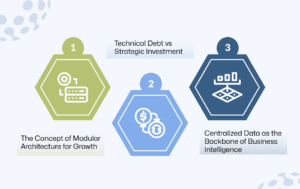
1. The Concept of Modular Architecture for Growth
And modular architecture enables firms to gradually expand their tech stack rather than replace their existing systems. Instead of implementing serviceable software platforms, companies are able to implement additional features or modules when requirements change.
This kind of elastic design helps minimize operational disruption in an innovation-friendly sector. Modular systems allow organizations to deploy emerging solutions such as machine learning tools, automation platforms and data analytics solutions ad hoc.
2. Technical Debt vs Strategic Investment
Quick-and-dirty software fixes might alleviate some short-term issues, but they usually end up being technical debt later. This results in an outdated infrastructure due to legacy systems and incompatible tools that increases maintenance costs and decreases efficiency.
Custom software development is tailored to business logic so it’s stable in the long run. Well-designed systems remove duplicate manual work and synchronize technology with the objectives of the operation.
3. Centralized Data as the Backbone of Business Intelligence
Data fragmentation leads to operational ambiguity. Sales, marketing and finance can’t operate on disparate tools which impedes fast and precise decision-making.
Centralized data systems are often seen as a single source of truth for the organization. Integrated platforms consolidate and analyze data from across departments, putting insights into the hands of leadership teams to discover trends, measure performance and define their holistic strategy.
Core Software Categories for Scaling Operations
As these organizations grow there is not one-size-fits-all solution; businesses need a suite of the right software stitched together. These solutions enhance efficiency and enable project management, customer relationships, and operational planning.
1. Optimizing the Customer Journey with Advanced CRM Systems
It allows being used in customer relationship management systems and enables tracking leads, managing communications, and analyzing customer behavior. Streamline your sales activities for your lead in one common dashboard with an upgraded CRM, which automates scoring and follow-up scheduling.
Automation using machine learning helps to identify high net-worth prospects and guess customer needs. This allows sales teams to focus on value-based conversations which continue adding up to improved conversions and sustainable relationships.
2. Streamlining Workflows with Custom ERP and Project Management
Enterprise resource planning platforms unify an organization’s varied functions into one ecosystem. These systems bring finance management, supply chain monitoring and human resources under one roof in a single dashboard.
These tools assist with things like information sharing, progress tracking, defining responsibility and deadline management. Improved collaboration and reduced communication silos Central visibility promotes better teamwork across all teams.
3. Automating Marketing and Sales Funnels
lead audience segmentation and some other approaches in managing campaigns across channels. Automation tools such as auto email sequences, chatbot responses, and analytic dashboards are intended to increase the productivity of marketing teams.
Machine learning-based analytics helps you identify patterns of how users engage and behave. Having this information enables companies to improve their marketing strategies and customize experiences for leads.
4. Scaling Infrastructure through Cloud Computing and Serverless Models
lead audience segmentation, etc., in campaign management across channels. Auto email sequences, bot responses and analytic dashboards are made for enhancing the effectiveness of marketing teams.
The analytics using machine learning finds patterns of how users interact and behave. With that information, organizations can improve their marketing tactics and customize the experiences offered to potential customers.
Future-Proofing Your Software Ecosystem
A technology-based approach cannot provide sustainable growth unless it is planned well ahead of time. Establish a periodic software performance audit or monitor your systems to ensure your tool is secure, scalable and fits the needs of your organization.
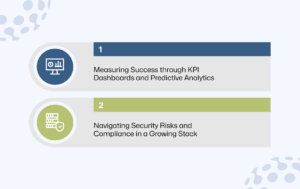
1. Measuring Success through KPI Dashboards and Predictive Analytics
When it comes to success measurement of the tools, performance measurement is one of the ways businesses can keep track. Dashboards can take your KPI to the next level, visualizing operational data and gauging metrics around things like revenue growth, customer retention and productivity improvement.
Predictive analytics powered by machine learning can build models to predict trends that are likely to amplify or mitigate the risks. This enables leaders to take forward-looking decisions regarding technology stack, operational efficiency, and competitiveness for the long term.
2. Navigating Security Risks and Compliance in a Growing Stack
One of the approaches firms can take to see how new software tools influence their productivity is by measuring performance. A KPI dashboard visually presents this operational data and provides insights into metrics like revenue growth, customer retention, and productivity improvements.
Machine-learning-based predictive analytics are capable of forecasting trends that would potentially exacerbate or mitigate risks. It allows leaders to act proactively to enhance operational efficiency and long-term profitability.
Conclusion
Create the well-designed software stack that is the engine for long-term business growth. The only businesses that will have the agility to respond to evolving market dynamics are those that adopt scalable CRM systems, flexible ERP solutions, and strong cloud foundations.
Aqlix IT Solutions focuses on various business streamlining & practices around custom-built software ecosystems for automation, data clarity and digital transformation. Long-term growth can be seeded by technology planning that aligns with business strategy and ensures software platforms grow to meet changing business needs.
Frequently Asked Questions
What software solutions are essential for growing businesses
CRMs, ERPs, project management tools and cloud infrastructure are the tools of choice for growing businesses. These tools assist in customer relationship management, workflow automation, and information centralization. When combined well, they streamline the operations and facilitate a scale of business growth.
Why is software integration important for business growth
Integration means that multiple software tools connect and work together seamlessly. If integration is not achieved, departments tend to operate with disparate data. Having linked systems enables organizations to optimize insights and leverage accurate data to make informed business decisions.
How does cloud computing help scaling companies
With cloud computing, companies do not need to buy any hardware but instead can scale up their computing resources on demand. Companies can expand storage, processing power and software services to meet demand. This makes it capable of handling spikes in user activity and responding with performance stability.
What is the difference between CRM and ERP software
Customer relationship management (CRM) software is specifically geared toward managing customer relationships, sales processes, and marketing interactions. ERP software binds and assesses larger commercial enterprise functions like finance, inventory control, and human resources. Together they deliver a holistic system that is enabling customer engagement and internal business activities.
How can businesses avoid software-related security risks
Businesses need to have secure authentication systems, conduct regular security audits, and have centralized access control. Well-defined policies about the use of software also stop unauthorized tools from entering into the technology landscape which minimizes vulnerabilities and helps stay regulatory compliant.