

Oracle APEX development is often viewed as a low code skill that’s very basic. So they often go for generalist web developers who do not have in-depth Oracle database experience. This can result in inefficient queries, security issues, and hard-to-maintain applications.
Now, organizations are moving toward hiring developers with a combination of strong SQL and PL/SQL knowledge along with more modern application development skills. Structured Process of Hiring Specialist Oracle APEX Developers That Build Scalable Enterprise Systems Aqlix and other such companies emphasize hiring professionals with a balanced skill set between fast development and robust backend architecture.
The Perfect Oracle APEX Profile
Before hiring an Oracle APEX developer, few things you need to consider in addition to low code experience. Developers need to know the fundamentals of Oracle ecosystem architecture and the mutual communication between enterprise apps and complex databases.
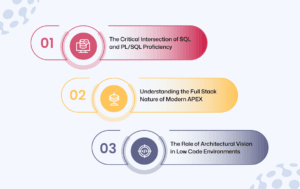
1. The Critical Intersection of SQL and PL/SQL Proficiency
As Oracle APEX applications run straight off the Oracle database, a good knowledge of SQL and PL/SQL is vital. A database-first approach where the database is treated as the heart of the application rather than merely a store, should be adopted by developers.
Professional developers optimize queries, use stored procedures correctly and structure data models effectively. So when applications manage bulk datasets or real-time reporting needs, this will help.
2. Understanding the Full Stack Nature of Modern APEX
Even though Oracle APEX eases the application development process, full stack capabilities are a necessity for modern projects. Developers should know how to use the Universal Theme framework, as well as have knowledge of JavaScript and CSS to create new user interfaces.
Front-end responsiveness, accessibility level, and mobile-friendly design have become the vital ones for enterprise applications.
3. The Role of Architectural Vision in Low Code Environments
Low code tools enable rapid application development, but if not done correctly during the planning phase technical debt can accumulate. Experienced APEX developers are fully familiar with the principles of application lifecycle management and modular architecture.
They create systems that facilitate future updates, integrations and scalability. So, as organizations build more and more features on top of these applications be it analytics dashboards, automation workflows or machine learning-powered data insights this type of architectural planning goes a long way to ensuring that individual applications remain maintainable.
Vetting and Verifying Technical Talent
The need for having a structured evaluation process comes when we want to hire Oracle APEX developers for our projects. Technical capability may not be accurately assessed by a basic review of resumes or credentials.
Conducting Real World PL/SQL Performance Testing
One of the most effective methods to assess developer expertise is practical testing. Instead of asking theoretical questions, candidates should practice optimizing SQL queries or designing DB procedures that work with a huge volume of data.
These assessments are informative about how developers think about indexing, query optimization, and optimized performance.
2. Evaluating Experience with REST Data Sources and APIs
Modern enterprise applications seldom run in isolation. APEX developers need to be able to integrate systems with external APIs and enterprise platforms.
Experience with REST data sources and web service interaction is required. Such functionality enables applications to interact with cloud services, CRM systems, or third party analytics platforms while ensuring the same data synchronization and application role.
3. Auditing Security and Authentication Implementation Skills
When Developing enterprise applications, Security is one of the most important things. Oracle APEX has built in mechanisms for authentication and authorization but they must be configured correctly by developers.
Technical analysis should include familiarity with the implementation of single sign on, LDAP integration, and protection against SQL injection.
4. Reviewing Portfolio Quality and UX UI Sensibilities
You get shadows of practical project experience from developer’s portfolio. There have been previous requirements for mobile-friendly applications, accessibility compliance and clean interfaces which organizations should review.
APEX applications developed well usually have a consistent usage of Universal Theme framework and navigation architecture.
Ensuring Long-Term Success and Mitigating Risk
Engaging an Oracle APEX developer isn’t just a one-time project. Over time, businesses need to ensure that their applications are maintainable, scalable, and secure.
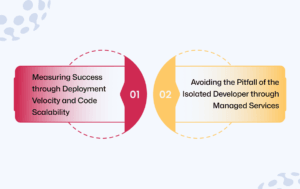
Measuring Success through Deployment Velocity and Code Scalability
The Oracle APEX developer is effective when it can hasten the deployment while keeping the system robust. This ensures that the output code is well structured and ensure skilled developers to deliver applications fast.
Scalable architecture enables organizations to implement a new feature or support more users without incurring enormous redesign costs.
2. Avoiding the Pitfall of the Isolated Developer through Managed Services
Trusting only one developer can lead to operational risks as limited knowledge is focused within that developer. Businesses usually address this by engaging in team based development or managed service partnerships.
Such staff augmentation or managed IT services from companies like Aqlix would give access to several specialists.
Conclusion
Business leaders today should approach hiring Oracle APEX developers with a far more measured consideration, they need to factor in technical know-how and also architectural thought processes into the hiring equation. Good candidates are people who have proficiency in databases, experience with front-end development, and enterprise security knowledge.
Organizations that employ deliberate hiring processes are more likely to be able to create scalable applications and evade long-term technical debt. In collaboration with seasoned technology partners like Aqlix, companies gain access to qualified professionals committed to providing stable Oracle APEX development as well as sustainable digital transformation initiatives.
Frequently Asked Questions
1. What skills should an Oracle APEX developer have?
A developer of Oracle APEX should have a solid understanding of SQL and PL/SQL, familiarity with Oracle databases, and knowledge of web technologies like JavaScript and CSS. They must also have knowledge of application architecture and security practices with integration through APIs to develop scalable enterprise applications that manage complex data efficiently.
2. Why is SQL knowledge important for Oracle APEX development?
It is essential to have good SQL knowledge, as the APEX application runs directly on top of an Oracle database. A developer has to write efficient queries, manage data models, and maximize performance. Poor SQL skills lead to slower response times for applications, inefficient processing of data, and issues with scaling due to increased business data volumes.
3. How can businesses test Oracle APEX developer expertise?
Real-world technical assessments allow businesses to assess developer expertise. It involves performance testing of SQL queries, creating PL/SQL procedures, and connecting APIs. Going over past projects and discussing architecture decisions also serves as a way to verify if one can still efficiently build reliable and scalable enterprise applications.
4. Can Oracle APEX integrate with modern technologies like AI?
Yes, Oracle APEX application can engage with modern technologies like AI, machine learning systems and bot interfaces. Such integrations enable companies to deploy predictive analytics, automate movers, and process large datasets more efficiently all in a secure enterprise application environment.
5. What are the benefits of hiring Oracle APEX developers through managed services?
Unlike employing a single developer, managed services gives you access to a whole team of specialists. This matches with development reliability, shared knowledge between team members, along with assistance for the maintenance and upgrading process. Additionally, it allows businesses to scale development efforts and ensures consistent technical standards across projects.