

This means that sales teams waste a lot of time chasing leads that will never result in customers.In the era of automation, modern organizations follow automated CRM workflows instead of manual qualification methods. Using machine learning, analytics and intelligent scoring models together allows CRM platforms to discover which leads are most likely to convert.
This automated qualification means that sales teams are only pursuing opportunities that have the highest chance of converting, and less well-prepared leads can go down nurturing paths. Such a change allows for better pipeline velocity, as well as systematic prospecting.
Why Manual Qualification Is Obsolete
Sales representatives assessed contacts using limited data, which often resulted in inconsistent decisions. Modern CRM systems centralize customer information and enable data-driven lead evaluation using behavioral signals and predictive analysis.
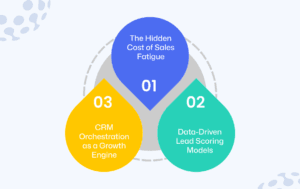
1. The Hidden Cost of Sales Fatigue
Sales teams are highly strained with manual lead sorting. Your representatives dedicate time to review contact information, validate data, and consider if prospects match your business criteria. This endless back-and-forth process eats into the time you could spend on more value-adding conversations with the right-fit buyer.
2. Data-Driven Lead Scoring Models
Models like lead scoring classify prospects using hard data points. Demographic information and behavioral engagement data are two examples.
Demographic data describes the prospect’s industry, company size, or role. In contrast, behavioral data centers around actions taken (i.e., when someone downloads resources, visits product pages, or engages with emails). Machine learning algorithms analyze patterns and assign scores based on conversion probability.
3. CRM Orchestration as a Growth Engine
A unified CRM platform serves as a common work environment for both marketing and sales departments. It unifies all your customer interactions, campaign engagements and sales communications into one single database. Enterprise technology solutions providers such as Aqlix help businesses with designing successful CRM architecture which not only enables information and workflow automation but also facilitates continuous digital transformation efforts.
Building the Automation Workflow
To succeed, you need a standardized automated lead qualification process based on defined business objectives. CRM needs to be configured in a way that captures the right data, reads behavioral signals and directs leads accordingly.
1. Mapping the Ideal Customer Profile (ICP)
Automating the process starts by defining an ideal customer profile. This profile is the organization or person that stands to benefit the most from a company’s product or service.
Higher qualification scores are assigned when these attributes align with predefined criteria by the system. This means that automated processes are in lockstep with business objectives and target markets clear ICP mapping.
2. Setting Up Behavioral Trigger Events
In addition to static attributes, modern CRM systems monitor user behavior for evidence of purchase intent. This is also in the likes of browsing pricing pages to downloading product guides or attending webinars. In the CRM, all activities can be configured as an event that triggers.
When a potential lead takes such action, the system automatically updates their engagement score and alerts your sales teams. Behavioral tracking helps CRM systems qualify leads in real time based on customer activity.
3. Automated Nurture Path Branching
Not all leads are ready to be contacted by sales. Rather than ditching lower-scoring prospects, automated nurture paths take them through educational info.
With rising engagement, this smart system pulls out scores & eventually sends the qualified leads to sales representatives.
Maximizing ROI and Avoiding Pitfalls
Logical field automation makes workflows and processes efficient; it must be done in a way that does not kill the human within the loop.
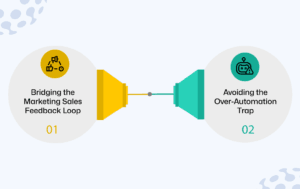
1. Bridging the Marketing Sales Feedback Loop
Effective lead qualification involves collaboration between both marketing and sales teams. Marketing creates leads through campaigns; sales give context to which ones convert.
Sharing such feedback helps in better scoring. CRM analytics enable teams to assess their performance metrics, modify scoring models, and hone CRM automation rules.
By allowing data to flow between departments, machine learning algorithms are able to enhance the accuracy of predictions. This collaborative feedback loop improves the lead qualification system as a whole over time.
2. Avoiding the Over-Automation Trap
Although the use of automated processes can make you more efficient, depending only on automation can lead to a detachment from the human connection vital in most sales processes.
Some leads do not respond to automated communication. Sales professionals will learn to understand when prospects require personalized attention something like a complex discussion about the product, for example, or an ideal strategic partnership.
The solution is a balanced approach that pairs automated qualification with human engagement. Technology takes care of repetitive work and sales professionals can now concentrate on connecting with qualified buyers in a meaningful way.
Conclusion
Automatic lead qualification enables businesses to hone in and spend their time on leads that are most likely to convert. Companies can optimize their pipeline management and eliminate wasted time by automating CRM, behavioral monitoring and scoring algorithms based on machine learning models.
Automation is not here to replace sales professionals but rather to assist them by providing accurate insights and prioritized opportunities. Companies like Aqlix IT Solutions help organizations implement advanced CRM automation strategies that harmonize data, technology, and long-term growth objectives.
Frequently Asked Questions
What is automated lead qualification in CRM?
Attaching a Standard Qualification Process to Appeased/Handled Leads Lead qualification automation goes beyond this one step further and, as the name suggests, employs your CRM tech to qualify prospects based on predetermined criteria and behavioral data. It scores leads based on engagement activity, demographics and predictive analytics. This allows sales teams to focus on the prospects that are most likely interested and close the deal.
How does machine learning improve lead scoring?
The machine learning examines past sales data to learn which sequences correlate with conversions. Comparing new leads to past customers, the system forecasts which prospects are more likely to purchase. These models gradually improve accuracy, helping with better CRM lead scoring and sales prioritization.
Why is an ideal customer profile important for automation?
An Ideal Customer Profile (ICP) defines the characteristics of an organization or individual that is most likely to gain value from a service/product. Then, respectively, it filters and scores these according to such rules in CRM automation. Clear ICP definitions ensure that sales teams invest their time in talking to prospects who align with business goals.
Can automation replace human sales interactions?
Sales automation can help sales teams with repetitive tasks like lead scoring, lead routing, and even tracking. But when it comes to developing trust, deciphering complicated requirements or closing deals, human interaction in sales is key. To drive sales, the best strategies incorporate automation tools with human-focused engagement from experts.