
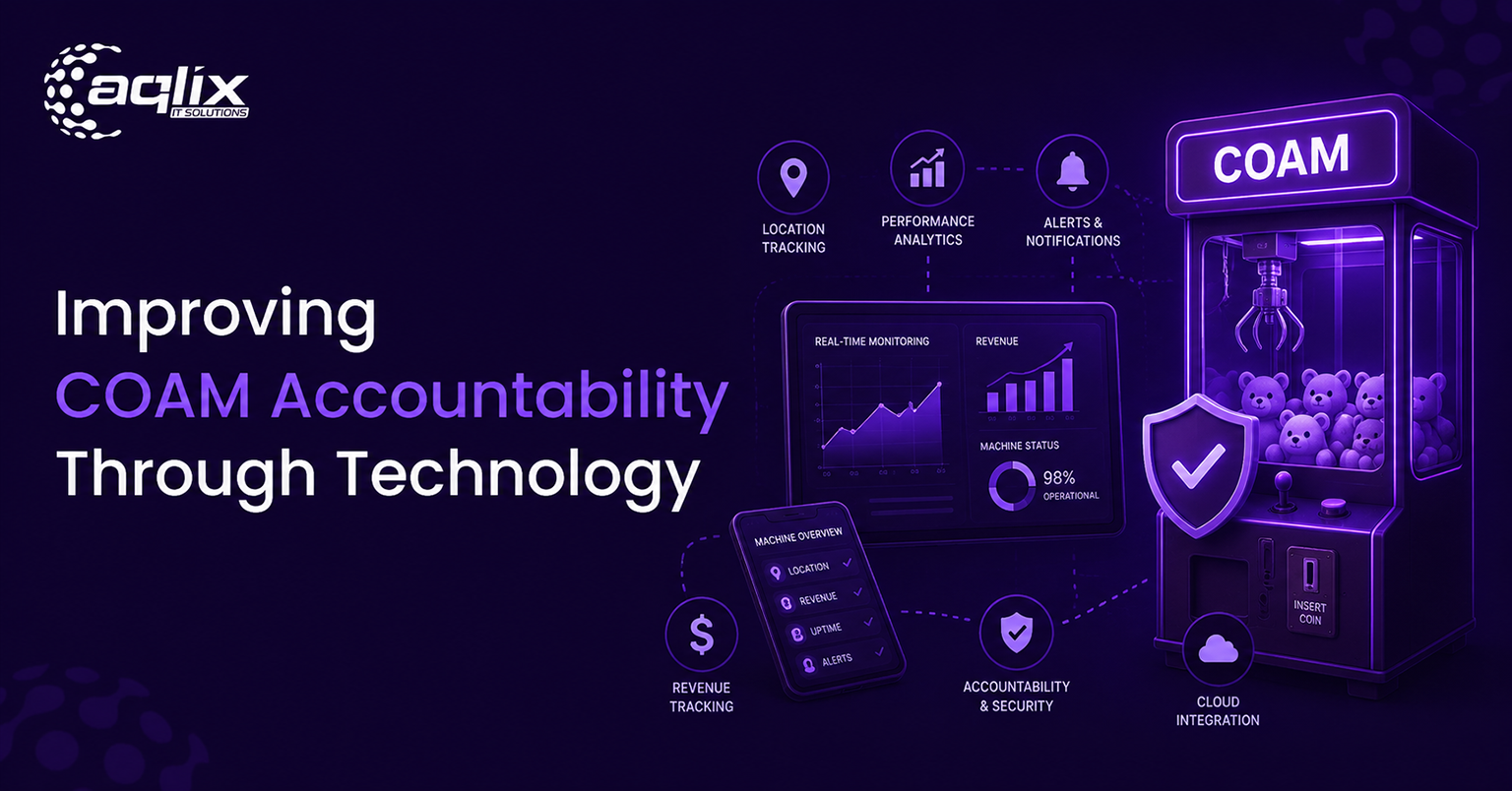

Coin-operated amusement machine, or COAM, businesses work in one of the most heavily regulated environments, where accountability is absolutely important for a smooth operation. If you operate the object from tracking to its machinery performance status at all times, even in financial records. Manual data entry is time-consuming, prone to human error, and can lead to delays in reporting with little visibility into day-to-day activities.
Keeping this in mind, technology has also changed the way COAM businesses maintain accountability on their platforms by moving to automated systems, always-on monitoring, and centralized data management. Aqlix IT Solutions has been empowering operators with robust technology solutions including COAM Management Solution, custom software development and data analytics enabling businesses to improve compliance and simplify operations while preparing for future industry needs.
How Technology Builds Better Accountability in COAM Operations
Accountability goes beyond financials in COAM operational delivery. This relates to being able to maintain accurate machine records, regulatory compliance monitoring, and transaction tracking at a single unit level and providing reliable operational insights from the system stakeholders. You built solutions for yourself, and today, modern digital solutions have taken a step further when they replace manual processes with digital prowess by automating tasks intelligently while minimizing human error. Adopting technology allows businesses to have more control over processes and builds trust with regulators and business partners alike.
1. Centralized Data Creates Complete Operational Visibility
It becomes more difficult to manage information when it is maintained separately from different COAM locations. There is also a lack of operational visibility due to differences in how reports are written or the need for employees to manually update them.
Such a centralized solution for management of COAMs provides an all-in-one platform to consolidate machine data, financial information, maintenance records and operational activities. This allows operators to view all locations from a single dashboard while keeping reporting standards consistent throughout the entire business. Decision-makers can access accurate information in real time whenever they require.
2. Real-time monitoring Improves Financial Transparency
The financial responsibility relies on near-real-time access to machine utilization and revenue-related data. Delayed Reporting: Both impressions and revenue with reporting delays lead to uncertainties and also get much more challenging to identify operational issues, especially for companies managing dozens of gaming locations.
Analytics using smart reporting enables operators to check collections, machine performance and transaction history in real-time. These automated reports decrease manual computations while generating precise financial perspectives that cater towards regulatory needs and improved business preparations.
3. Automated Reporting Reduces Human Errors
Manual documentation is plagued with calculation errors, duplicate entries and missing information. But these glitches make it a real big compliance challenge during audits or due diligence if the regulatory inspections happen.
It automates report generation, and it is presented to the end-user whenever suitable without needing to perform repetitive manual work each time due to automated reporting tools & detailed enterprise software development. Automation enhances accuracy and enables savings on precious administrative time while also making sure the updated documentation is preserved at every reporting cycle.
Modern Digital Solutions Strengthen Compliance and Performance
Technology fosters accountability, but it also aids growth-focused businesses for an extended period of time. Operators are able to streamline workflows, issue simple reports to regulators, and monitor their performance endlessly with the help of digital platforms. This intelligent software, equipped with automation, allows organizations to comply with their regulatory requirements while adjusting promptly to changes in the operations of the entities they regulate as well as changes in needs emerging from the internal organization and external markets.
1. Digital Workflows Simplify Daily Operations
The daily COAM operations include managing machine maintenance, technician scheduling, inventory updates and financial reconciliation. Performing these activities individually can still lead to unnecessary turnaround times and added administrative burdens.
Custom-made software development can help the organizations develop their own workflows as per the needs in their operations. Automated task management assigns clear responsibilities, delivers on time, and documents everything for higher accountability across every department.
2. Secure Cloud Platforms Protect Critical Business Data
COAM plays with some core financial and operational data, which needs to be secured in a way that only appropriate parties can access it. The use of paper records and separate systems also increases the risk of loss or unauthorized modifications to your data.
Latest cloud solutions offer centralized storage in a secure environment where user permissions are controlled and auto-backup is taken on a regular basis. Business owners will have encrypted operational data at their disposal wherever they are authorized, but sensitive information and particulars of regulatory records always remain in safe hands.
3. Technology Enables Smarter Business Decisions
Decision-making based on known facts, rather than assumptions, increases accountability among leaders. Deep analysis of performance trends, revenue comparison and machine utilization can help a business get better insights to improve its efficiency.
The integration of technology consultancy with business intelligence reporting empowers organizations to spot operational opportunities, effectively position machines, and better performance overall. Reliable analytics helps to plan better and promotes accountability across the entire COAM business ecosystem.
Conclusion
Technology has been the key component of a modern COAM enterprise’s bid for enhanced accountability in considering processes. Automated reporting and centralized management paired with secure cloud infrastructure and real-time analytics enable organizations to operate more transparently while decreasing manual effort and improving compliance with changing regulatory expectations.
Such is the case when organizations are looking to achieve a long-term path of excellence and decide to invest in scalable digital solutions tailored to their operating requirements. Aqlix IT Solutions has emerged as a digital transformation partner to COAM operators that empowers them with innovative software solutions supporting accountability, improved efficiency and future-ready operations. Get in touch with our team to learn how the right tech can help grow your business.
Frequently Asked Questions
1. Why is accountability important in COAM operations?
Accountability facilitates reliable financial disclosures, adherence to regulations, operational visibility and responsible machine activity. Applicable Strong accountability practices amplify errors and build stakeholder confidence & designing them will help to build reliable business processes that aid long-term operational success while audits and inspections are made easy.
2. How does technology improve COAM accountability?
It assists in automating reports, consolidating the operational data, and offering real-time tracking to reduce human errors. Digital solutions allow your business to have better visibility into how they are performing and ensure compliance leverage on definite documentation, secure up-to-date data management systems, and intelligent reporting capabilities.
3. What are the advantages of using a COAM Management Solution?
Enabling easy tracking of machines, reporting financials, scheduling maintenance, providing documentation on compliance, and monitoring operations using the COAM management solution. A complete integrated solution to consolidate access, streamline processes, strengthen reporting and leverage full revenue potential across multiple properties.
4. Can cloud technology improve data security for COAM businesses?
Yes. Cloud platforms provide encrypted storage, automatic backup and access control but are accessible from anywhere. They provide the option to keep on operating at a substantially lower risk than traditional storage solutions while protecting critical operational data.
5. Why should COAM businesses choose customized software solutions?
They are tailored solutions that suit exact business workflows, compliance, and/or operations requirements. Unlike the generic software, customized solutions are really a blessing in disguise that prove to be effective for maximizing productivity, accelerating management processes and automating monotonous chores while also rendering tremendous corporate insights and auto-scaling at the same pace as the organizational needs without much fuss.