
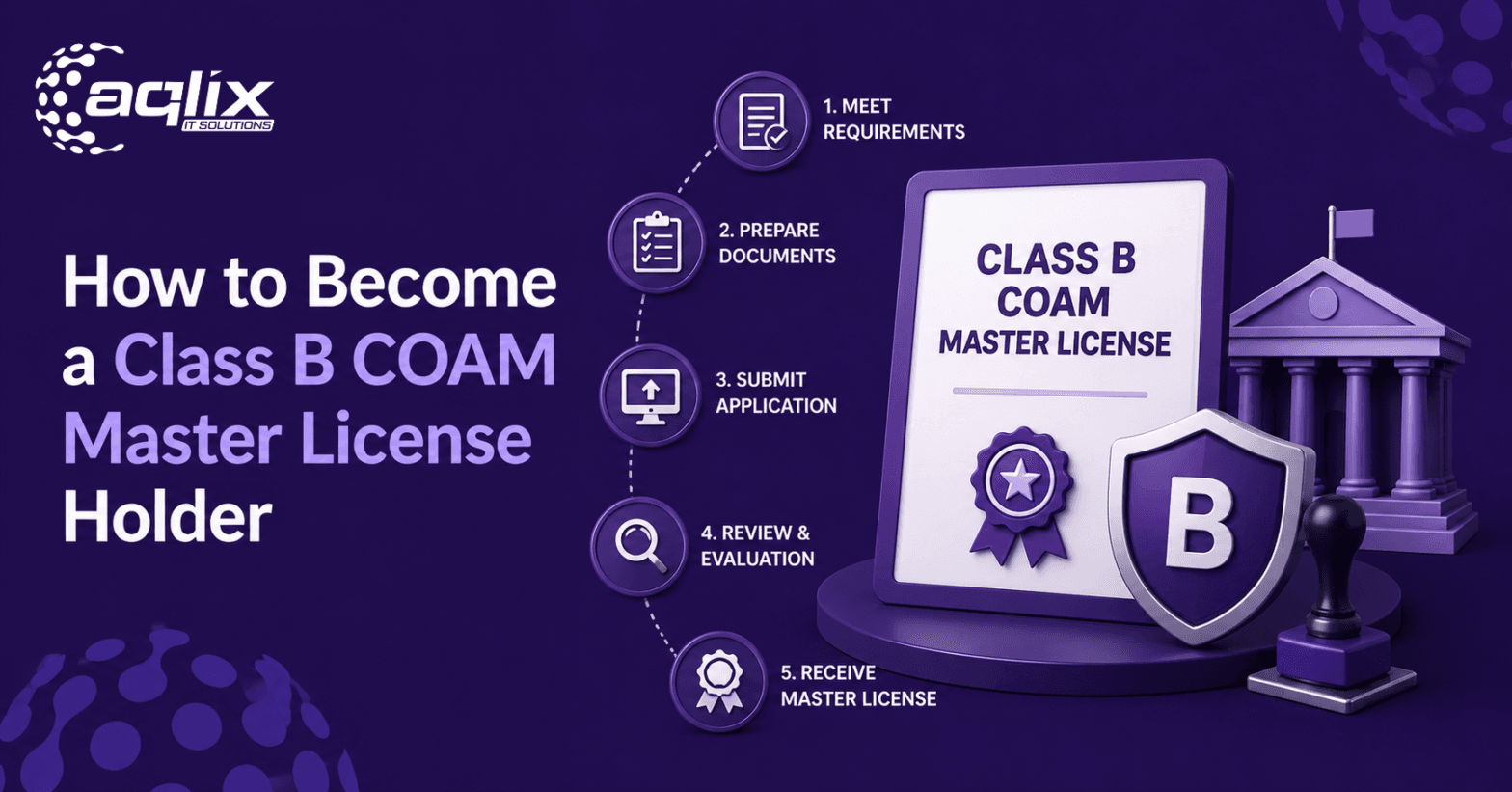

A number of Georgia COAM operators express interest in growing to become a Class B COAM master license holder but the licensing process tends to raise critical questions. What is even harder to understand are the eligibility requirements, documentation expectations, compliance obligations and operational responsibilities, particularly for those entering or expanding into a business where they’re conducting COAM operations. Completing paperwork is only one step in a successful application, the foundation of which lies in strong compliance practices and organized business processes.
This is exactly where Aqlix IT Solutions goes ahead and help operators in maintaining proper documentation, reporting, inventory tracking, and operational management. With knowledge of the licensing process and adequate preparation, businesses can set their sights on prospering within the Georgia COAM industry for years to come.
Understanding the Requirements for a Class B COAM Master License
In the process of doing so, you will have to develop a strategic plan for applying for the license that is compliant with Georgia Lottery regulations, the Class B COAM Master License. Before and after approval, applicants must show evidence of operational preparation, appropriate recordkeeping, and processes that continue to ensure compliance with regulations.
1. Understand Eligibility and Licensing Responsibilities
A Class B COAM Master License allows businesses to legally own and operate Coin-Operated Amusement Machines (COAM) in accordance with state law. Making the correct inferences from that and realizing what licensing entails, like machine-[management] duties, where you are obligated to send off reports from machines, and compliance checking, all require really thorough comprehension of the issue on a technical level. Defining these expectations will lead you to fewer application errors and smoothen the approval process for poor applicants.
2. Prepare Accurate Documentation Before Applying
One of the most important events in licensing is documentation. Well-organized records are necessary for the existence of any business, including information about ownership, business registration, financial records, contracts and operational documentation. Well-documented COAM practices can provide evidence of readiness during reviews and ultimately facilitate preparation for future compliance management. Software development services are popular among operators that need to streamline the development of documentation workflows and administer with ease.
3. Build Systems That Support Regulatory Compliance
Once you are issued a license, regulatory compliance doesn’t end. Applicants are needed to develop processes encompassing ways of reporting, recordkeeping, machine monitoring and operational supervision. Initially, businesses are more prepared for compliance audits and continuous reporting requirements when working with structured compliance processes. This proactive approach both minimizes risk and increases operational consistency across the organization.
Managing Operations Successfully After Becoming a Master Licensee
Getting a license is just the start. Success in the long term hinges on great operational management and accurate reporting as well as inventory control and continual compliance practices that get businesses organized for a successful audit or inspection.
1. Implement Strong Inventory and Route Management Practices
As a master licensee, typically with machines across multiple locations, it is important to manage your COAM inventory management and route management. With accurate inventory tracking, operators can track the location, maintenance status and how effectively machines operate. Well-executed route operations not only enhance service efficiency but also compliance with regulations. Organizations with the records in place are more prepared to answer audits and operational reviews.
2. Focus on Revenue Tracking and Reporting Accuracy
Licensed operators have key responsibilities, including accurate COAM revenue tracking and reporting management. Accurate financial records ensure transparency and they also enable businesses to meet the regulatory requirements. Automated reporting processes minimize manual errors and provide a better view of how well the business is doing. Most organizations utilize software development services to combine their reporting workflows into one and maintain data accuracy across multitudes of locations.
3. How Aqlix IT Solutions Supports COAM Operations
When you get bigger, unrewarding processes like documentation, compliance and service requests become harder and harder to manage. Aqlix IT Solutions enables operators to effectively manage these operations through the Aqlix COAM Management Solution. The application provides support for COAM compliance, service request management, asset tracking, route management, EFT management, and documentation management. An increase in workflow visibility and a decrease in polyonymous processes allow the operators to remain concentrated on business expansion while continuing to maintain operational efficiency. For businesses with an eye to scale, centralized management tools are often joined via software development services to keep up with changing operational needs.
Conclusion
A successful approach to becoming a Class B COAM Master License Holder requires you to be prepared, organized, and want regulatory compliance in this industry. When you think about it, whether it is documentation management, reporting accuracy, inventory tracking or handling of operations each step leads to a successful long run.
Georgia COAM Operators are securing structured processes for investment and implementing processes that prepare their operations to handle growth and scale while remaining audit-ready. Aqlix IT Solutions is simplifying the process of compliance management, reporting and inventory tracking as well as helping businesses streamline operational workflows via the Aqlix COAM Management Solution for better-organized COAM operations in Georgia.
FAQs
What is a Class B COAM Master License in Georgia?
A Class B COAM Master License is available for certain businesses to own and operate coin-operated amusement machines following the requirements stated in Georgia Lottery Regulations. Licensees must maintain compliance, operate machines, and track revenue all while adhering to strict reporting and record-keeping requirements laid out by the state.
What documents are typically needed when applying for a Class B COAM master license?
Most applicants require some forms of business registration records, ownership documentation, financial information and operational records as well as other supporting materials regulators could need. This documentation is also organized to allow for easy review which can showcase operational readiness. Well-maintained records support future audit preparation and interoperability management activities as well.
Why is compliance management important for master licensees?
It provides operators with tools that enable them to fulfill their reporting duties, retain records of compliance activity, and mitigate the risk of noncompliance during audits later on in their operations. Regulatory risk can be reduced when compliance practices are stronger, and operational efficiency is also more sustainable. Companies with well-defined processes for documentation, reporting and asset tracking are typically primed for long-term success.
How can technology improve COAM operations?
When it comes to documentation management, reporting management, COAM inventory management and service request management, technology can really make things easier. They provide greater efficiency, eliminate human error, and open up visibility into how things actually run. In addition, software development services are also commonly used by operators in order to develop solutions that meet their specific operational requirements.
How does the Aqlix COAM Management Solution help master licensees?
The Aqlix COAM Management Solution enables businesses to track compliance activities, manage inventory, service operations, route management, revenue reporting and documentation together in one framework. This type of rest enables better operational efficiency, audit readiness and operators to take back control over how they manage their daily COAM business processes.