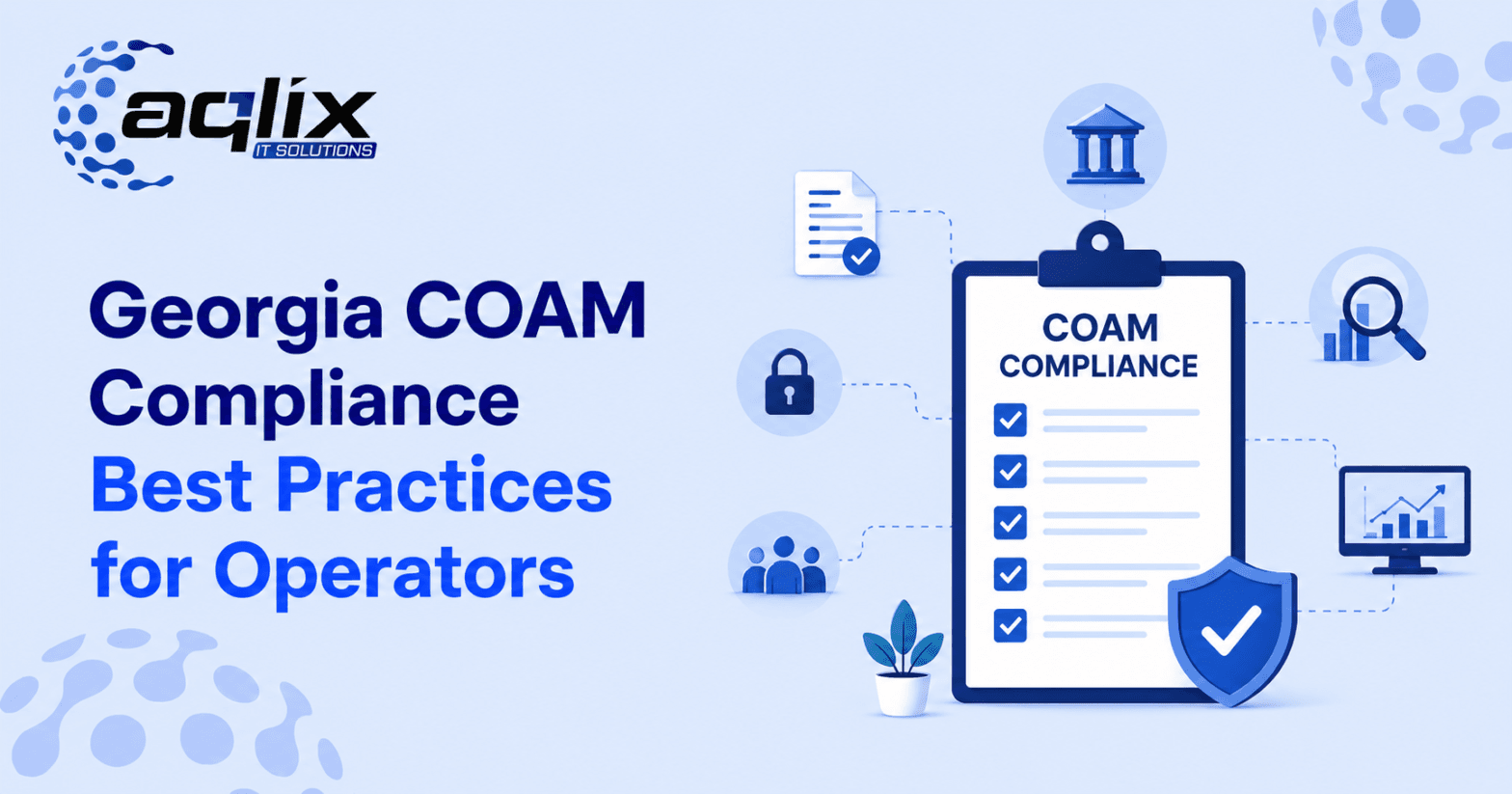

You cannot just place coin operated amusement machines (COAMs) around Georgia, although you must comply with state regulations when it comes to their operation. Operators are required to be compliant with regulations, accurate recordkeeping, machine integrity, and processes that will consistently maintain compliance. Inability to comply with regulations can result in disruptions of operations, monetary fines, and reputational damage.
With the dynamic environment of Georgia COAM, operators will need to be able to build proactive measures that help stay compliant while running their business seamlessly. Aqlix IT Solutions, a leading custom software development and tech solution provider for regulated industries, acknowledges this need to simplify compliance management and operational oversight. Instilling compliance best practices allows operators to minimize risk, gain more transparency and build a foundation for success in the long-term.
Building a Strong Compliance Framework
Compliance is best executed when it becomes immemorial to day-to-day activity, engine flight instead of something done as in-software at the very least minute. Defining processes and accountability ensure year-round readiness for compliance.
1. Maintain Accurate and Consistent Documentation
Documentation is the key piece of any compliance management process. Operators must keep a record of machine installations, service, inspections and operational changes against contracts.
Searching for key information is harder and slower when records exist in many different places or are manipulated manually. Access is more streamlined with a single source of documentation, rather than separately stored files, which decreases the administrative burden.
2. Create Standard Operating Procedures
For routine, COAM operation each activity must have clear-cut guidelines for the action. Standardized processes help ensure that employees handle machines, service issues, inspections, and recordkeeping in a manner that is consistent.
Workhard documentation also supports onboarding and training a new employee, limiting the opportunity for inadvertent compliance errors stemming from erratic workflows. As scale increases, standardized processes become more important to maintain the quality of operations across different locations.
3. Conduct Internal Compliance Reviews
The risk of a business needing to comply with the penalty of an official inspection can leave the door open for greediness. Regular internal reviews allow operators to spot gaps before they develop into more serious issues.
Machine learning can thus assist with identifying red flags and unusual behaviors, as well as provide support for proactive compliance monitoring initiatives. Even when there are no external reviews, internal reviews support continuous improvement but also assure operators are ready for compliance.
Best Practices for Ongoing Compliance Success
A one-off tick-box exercise Compliance is not. Continuous monitoring, employee awareness and a good technology stack are needed to ensure consistency across operations.
1. Prioritize Employee Training and Accountability
Compliance standards are largely sustained by the employees. The best compliance policies in the world can fall flat if your team does not comprehensively understand their responsibilities.
Regular training ensures that staff involved are aware of operational requirements, reporting expectations and processes within the company. Establishing accountability at every level of the organization promotes compliance-focused decision making and minimizes avoidable errors.
In addition, operators should have defined communication channels so employees are able to raise risks, seek guidance and deal with possible compliance problems before they spread.
2. Use Technology to Improve Compliance Oversight
A large number of operators have resorted to custom software solutions for their compliance and reporting activities with the objective of achieving operational visibility at various sites and reducing time taken. Having technology helps operators see more visibility into their operations, as well as simplifies the recordkeeping and reporting processes involved.
With digital platforms, you can perform almost everything from one system, including storing documentation, tracking activities, monitoring inspections, and generating reports. Automated workflows also help to ease administrative burden and increase consistency across various locations.
Furthermore, operational data can be analyzed to identify trends that are likely to develop into compliance risks using machine learning methods.
How Aqlix Supports Georgia COAM Compliance
Supported by custom software development and product development experience, Aqlix COAM Management Solution focuses on providing a single-source platform for COAM business operators to better manage their compliance processes.
Not only does the solution give organizations more visibility into operations, but it also supports documentation management, inspections, service tracking as well as reporting and workflow automation. Which helps the operators to have better control over the all compliance-related activities by integrating most important information in one system.
Aqlix enables Businesses to save on administrative efforts by providing better visibility and accountability in operations. Operators benefit from real-time access to information and simplified reporting, so they can continue to grow their business while assuring compliance.
Conclusion
As they say in the south, compliance is an integral piece of any successful COAM operation in Georgia. An operator that is more proactive in these areas of compliance will be better placed to reduce risk, drive greater operating consistency and maintain effective relationships with regulators and partners.
Operators can create a sustainable and long-term compliance framework by focusing on accurate documentation, standardized procedures, employee training, technology adoption & strong communication. With the visibility and automation offered by compliance management solutions like Aqlix, you can ditch day-to-day monitoring, our platform enables your business to operate in a regulated environment with ease.
FAQs
1. Why is compliance important for Georgia COAM operators?
Compliance ensures that operators meet regulatory requirements, maintain proper recording practices, and reduce operational risks. Establishing compliance practices helps organizations avoid penalties, be audit-ready if needed, and introduce transparency into their business operations. Compliance management process also plays a vital role in long term sustainability of business and professional reputation.
2. How often should operators review their compliance processes?
Operators should not wait for inspections or audits but do internal reviews all year long. Well-planned assessments can reveal process gaps, enhance accuracy in documentation and ensure operations keep their practices up to date. Ongoing review allows your organization to adapt and continue improving, while avoiding the risk of compliance issues.
3. What role does employee training play in compliance?
Employees learn what to expect when they work for the company, get a sense of how things operate, and even their compliance obligations. Better trained personnel tend to abide by processes (if they are well documented) and to identify precursor events before they become major incidents. Continuous training reinforces accountability and fosters a culture of compliance across the organization.
4. How can technology improve compliance management?
Technology consolidates documentation, simplifies reporting and automates a workflow to provide deeper visibility into the performance of operations. Digital systems lower the dependence on analog processes, and lessen the laborious documentation while enabling operators to surface information much faster. This enhances accuracy, efficiency and overall compliance monitoring across multiple locations.
5. How does Aqlix help operators maintain compliance?
A centralized COAM Management Solution that Aqlix has to offer, with documentation management, inspections, service tracking & reporting as well as workflow automation. The platform assists operators to enhance operational visibility, deliver accountability and ease compliance-related activities with minimum manual intervention thus improving the overall business efficiency.