

Generic interfaces are often overwhelming to users, resulting in choice paralysis and high bounce rates. Traditional personalization is retrospective in nature, responding to the data of previous behavior and missing the opportunity of anticipating needs before they surface. AI predicts user needs using real-time behavioral analysis, reducing friction, directing action and increasing satisfaction.
Predictive AI personalization enables digital platforms to personalize and evolve layouts, content, and interactions in response to user intent. Enterprises that are using predictive UX can enhance their conversions, engagement, and long-term loyalty while enabling a seamless digital experience.
The Science of Anticipatory Design
Using AI to anticipate user actions is called anticipatory design and means you control the interaction. Through a blend of machine learning, behavioral analytics and UX design principles, businesses are now capable of serving experiences that feel both intuitive and responsive. Predictive personalization alleviates cognitive load, brings content to the forefront that is relevant when it’s most needed, and improves the perception of intelligence and responsiveness of a platform.
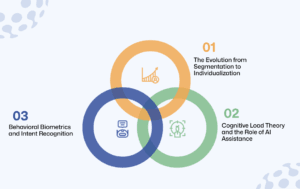
1. The Evolution from Segmentation to Individualization
Traditional personalization involves placing users into large buckets called personas and giving the same recommendations to everyone within those personas. Predictive AI looks at every user as a “segment of one,” parsing clickstreams, time-on-page, and sequences of interactions. Such a granular approach could tailor content, product recommendations, and interface modifications to how people behave during the same phase of their interaction with the website, achieving exactly what they wanted when coming to that page.
2. Cognitive Load Theory and the Role of AI Assistance
Increased cognitive load results in decision fatigue, abandonment, and frustration. Predictive AI makes the brain use a lot less muscle power by anticipating the “next likely action,” offering relevant products or content and wiping away any excess mess. When effort is minimized, users are able to yö g intuitively (the word “g” is omitted, for example), allowing them to complete tasks quicker and engage more with what the platform has to offer.
3. Behavioral Biometrics and Intent Recognition
Micro-interactions like hover patterns, scroll velocity and timing of navigation insights can show us user intent. AI algorithms process these behavioral biometrics in real-time to predict needs. Becoming attuned to more straightforward signals allows adaptive interfaces to offer preemptory options in concert with users’ goals, optimizing engagement across the user journey and diminishing friction throughout digital experiences.
Measuring Success and Avoiding Pitfalls
In A Nutshell: Measurement, Monitoring and Trust Are the Only Ways Organizations Will Know If AI Will Work For Them In Alignment With Their Relevance And Engagement and Ethical Use of Data
1. Beyond Conversions: Measuring User Delight and Retention
Ensure success metrics go beyond direct conversions. For example, by tracking longer outcome measures like Net Promoter Score (NPS), user retention signature, and lifetime value (LTV), you can ensure the leading Predictive UX references lead to long-term engagement. These moves speak volumes to how effective personalization can be in maximizing end-user loyalty and satisfaction.
2. Avoiding the “Creepy” Factor and Privacy Paradox
Make sure success metrics are broader than just direct conversions. By monitoring longer outcome measures such as Net Promoter Score (NPS), user retention signature, and lifetime value (LTV), you can be confident the leading Predictive UX references result in sustained engagement. These measures are a strong testament to how powerful personalization can be for increasing end-user loyalty and satisfaction.
Implementing Predictive UX Workflows
Predictive UX on a more effective scale will require marrying AI-oriented insights with techy workflows that autonomously alter content, layout, and recommendations. A system that is always learning, adapting to the way users interact with a site and optimizing for engagement and conversion metrics.
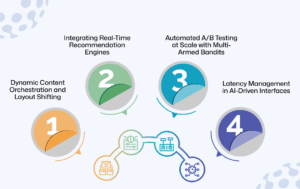
1. Dynamic Content Orchestration and Layout Shifting
AI engines can reorder homepage modules, call-to-action buttons and product displays based on conversion path predictions. Dynamic content orchestration allows users to first see the most relevant pieces of content in order to entice them to take action. This method uses machine-learning models to continuously improve where and how to display things for optimal effect.
2. Integrating Real-Time Recommendation Engines
Others include recommendation engines which use collaborative filtering and deep learning to make product or content suggestions based both on your individual user behavior as well as behavior from similar users. Additionally, real-time updates that allow suggestions to adapt and change depending on the user’s actions help refine relevancy and keep a positive feedback loop open. Integrating with CRM and analytics tools further improves predictive accuracy and personalized effectiveness.
3. Automated A/B Testing at Scale with Multi-Armed Bandits
Multi-armed bandit algorithms enable AI to simultaneously test variations of UX against one another and dynamically direct traffic to top-performing versions. Less manual A/B testing is required, learnings are faster and the interface(s) get optimized on the go, which leads to higher conversion rates with lower resource costs.
4. Latency Management in AI-Driven Interfaces
Real-time personalization only works if you have the infrastructure to accommodate it, lest you work with latency. Edge computing and well-optimized server-side processing mean that AI computations happen without page load lag. Low latency is key to smooth experiences, both ensuring continued engagement and satisfaction while serving advanced predictive information in real-time.
Conclusion
Predictive AI personalization creates an adaptive, responsive environment in a digitally driven experience that meets user needs before they are even articulated. Enterprises can leverage ML algorithms and predictive modeling along with real-time behavioral intelligence to drive engagement conversion and long-term loyalty.
Organizations can take predictive UX methods by using Aqlix IT Solutions and integrating AI analytics along dynamic process workflows to maximize the experience in each step. Get To Know Us: Aqlix IT Solutions How We Do Intelligent Personalized User Experiences For Each Organization
Frequently Asked Questions
What is predictive AI personalization?
Predictive AI personalization leverages machine learning and behavioral analytics to forecast user needs in real-time. Using this data, AI leverages historical interactions, click patterns, and other micro behaviors to tailor interfaces, recommendations, and content dynamically for improving engagement and satisfaction across digital platforms.
How does AI reduce cognitive load for users?
AI predicts the next likely action of the user and shows contextually relevant content, saving mental effort. Providing users with intuitive, straightforward options makes it easier for them to get things done more quickly. This enhances the satisfaction of users during their interactions and can increase retention and conversion rates as a function of less friction in transacting digitally.
What are behavioral biometrics in UX?
Behavioral biometrics monitor slight user activity such as the movement of the mouse, scroll speed, and hover patterns. These signals are complemented by what AI has learned about intent and a prediction of actions, allowing for real-time adjustment of the interface that translates into engagement, personalized recommendations, and supported user workflows.
Can predictive UX increase conversion rates?
Yes. Using relevant content, personalized recommendations and adaptive layouts to present different options to users based on predicted behavior, predictive UX helps guide information consumers toward the desired action. By aligning the look and feel of the interface with user intent and behavioral patterns, for example, AI-driven personalization increases engagement (reducing bounce rates) while improving conversion rates.
How do enterprises implement predictive AI effectively?
To implement AI, marketers must combine the best of both worlds: AI analytics along with CRM (customer relationship management), recommendation engines and dynamic content. A constant loop of monitoring progress and automated A/B testing at scale, paired with ethical data practices can help make personalization relevant and useful for users in addition to being a trustworthy experiment that moves the business needle and improves user experience.