

Over the years, Oracle APEX has grown to become one of the most favorite tools that enhance developer productivity through low code/no-code application development. Quickly without code and using the power of Oracle Database, it enables businesses to build data-driven web applications. But there are some very common mistakes that prevent many Oracle APEX applications from being able to provide the expected performance, scalability and long-term value.
When organizations use low-code platforms as just shortcuts, rather than strategic development products, this results in technical debt and slow systems leading to user dissatisfaction. By knowing common mistakes to avoid, teams can build sustainable and scalable Oracle APEX applications that will help ongoing digital transformation initiatives.
Why Oracle APEX Projects Fail
However, Oracle APEX does not automatically assure success with any application regardless of its flexibility. Well-thought-out functional architecture and performance help ensure the success of many projects.
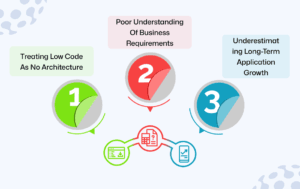
1. Treating Low Code As No Architecture
Low code does not mean no architecture. This is one of the biggest mistakes I have seen in Oracle APEX development. APEX certainly simplifies development however, it does not bypass best practices in application design.
This leads, in non-NERP applications with no proper database normalization at all times within their modular structured design with separated concerns, to a tightly coupled massive shantytown of application design that is nigh impossible to scale or modify from the original purpose. Overusing dynamic actions and embedding too much logic in page processes and skipping reusable components can make things a hell of a maintenance.
2. Poor Understanding Of Business Requirements
Poor adoption of Oracle APEX projects is often driven by unclear or incomplete business requirements. When stakeholders are not aligned, developers may end up building features that fall short of operational needs.
This leads to changes, rework and inefficient workflows. Low-code platforms have made iteration easier but fast rework is causing complexity in the system and a lack of stability.
3. Underestimating Long-Term Application Growth
A lot of Oracle APEX applications are built to suit immediate needs, and little did they think about moving forward. Constantly making crude optimizations to single tables in the data warehouse is treating the symptoms rather than the disease, as performance bottlenecks become apparent when user number and / or volume of data grow.
Expecting multi-user scalability and expandability without proper planning and indexing strategies limits your application. Initially lightweight applications can buckle with enterprise-level use.
Performance And Scalability Optimization Errors
Performance tuning is a must for corporate Oracle APEX practitioners. Ignoring the optimization strategies might lead to slow load time and processing even if applications are efficiently designed.
1. Poor Page Rendering And UI Design
Poorly designed or implemented user interface elements unnecessarily degrade the performance experience of Oracle APEX applications. Regions that are not needlessly added, page items that are not needed and heavy dynamic actions increase the rendering time.
JavaScript logic is complex, and overuse of interactive reports can affect performance especially for users on slower networks. Using clean UI design practices, simplified page layouts and optimized region refresh strategies have improved responsiveness immensely.
2. Not Leveraging Built-In APEX Features
Native features of Oracle APEX that improve performance include interactive grids, RESTful services, built-in authentication schemes, and caching mechanisms. Developers will copy-paste functionality instead of pulling optimized native components.
That causes code redundancy and missed optimization potential without utilizing those features. Declarative development tools from Oracle APEX are simplifying and stabilizing the proper way of using them.
3. Failing To Optimize For Large Datasets
Query optimization is quite critical while dealing with high-volume data. Paginating and filtering is also very important since an application that loads all the data into reports can lead to slowness.
When dealing with large datasets, database indexing, query tuning and processing on the server-side becomes essential. By using lazy loading and following the SQL best practices, Oracle APEX applications can perform seamlessly with millions of records.
Advanced Best Practices For Oracle APEX
Tips for Developing Future-proof Oracle APEX Applications in 2023: Balancing Low Code Productivity with Technical Considerations. Before the value-added value of innovation can be activated, organizations must align it with governance.
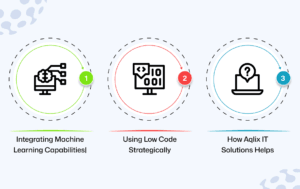
1. Integrating Machine Learning Capabilities
Leveraging its domain knowledge, machine learning augments Oracle APEX applications with predictive analytics, anomaly detection, and intelligent automation. Machine learning models helps in prediction, customer behavior analysis and real-time dashboard insights. By adding ML APIs or Oracle Machine Learning capabilities to these applications, we can then provide data-driven decision support and have the low-code part.
2. Using Low Code Strategically
Low code should augment, not supplant structured development practices. Using declarative tools along with custom PL/SQL, RESTful APIs, and secure integration layers gives us better flexibility and scalability. Stable versions are ensured with governance frameworks, version control and deployment pipelines. Such balance maintains architectural integrity and speeds development.
3. How Aqlix IT Solutions Helps
Oracle APEX Projects Scalable Architecture, Business Alignment, and Performance Optimization. With a blend of machine learning and automation with best-in-class database security, Aqlix IT Solutions helps enterprises to create agile, robust & next-generation solutions that can scale up for sustainable growth.
Frequently Asked Questions
What are common mistakes in Oracle APEX development?
The most common mistakes are not addressing the application architecture, unclear business requirements, bad query optimization and over-compiled user interface components. In some cases, developers run low-code tools without any planning. All of these issues will impact the scalability, performance and long-term maintainability of Oracle APEX applications within an enterprise environment.
How can Oracle APEX applications be optimized for performance?
Performance optimization includes query tuning, good indexing, pagination for bulk records and efficient UI designing. Using the native APEX features (caching, interactive grids) also improves responsiveness. The structured architecture planning makes sure that such an application corresponds to a scalable solution as soon as user numbers and the volume of data will grow.
Can machine learning be integrated into Oracle APEX applications?
Yes, to integrate the machine learning through the Oracle API and Oracle Machine Learning services or use external AI running on top of databases. ML makes predictive analytics, smart dashboards, and automated workflows possible. Applied wisely, it enriches decision-making elements of Oracle APEX applications without adding latency or opening up new attack surfaces.
How does Aqlix ensure secure Oracle APEX applications?
Authentication schemes, role-based access, encryption, and secure database practices are all implemented in Aqlix. Enterprise-grade security across Oracle APEX applications, with regular audits, secure API integrations and compliance with standards to prevent vulnerabilities.
Why choose Aqlix for Oracle APEX development?
Aqlix merges low-code capabilities with enterprise architecture, scalable design, and AI-powered features. With a proven methodology, they provide structured development for sustainable and high performing Oracle APEX applications in line with business objectives and future growth.