


Technology transformation is no longer just for large, deep-pocketed organizations. Today, you can’t even be a startup and not adopt the most advanced technology in order to scale fast, work efficiently and compete with others in dynamic markets. From optimizing workflows and customer experience to driving data-based decisions, technology plays a role in most parts of the startup process.
This blog delves into 5 successful digital transformation strategies to enable startups future-proof their business, make their operations resilient and create a platform for scalable growth. These approaches are indicative of the broader trend toward flexible, intelligent and secure digital ecosystems that enable innovation from day one.
What Do Startups Need to Know About Digital Transformation?
Before I share the tactics with you, let’s first look at why digital maturity is so critical in the early stages of building a business. In startups, where the pace of innovation matters most- adaptability and efficiency can be make or break.
Digital transformation is a tool that allows startups to accelerate innovation cycles, so teams can get their ideas into the market quicker. This means not only can a startup pivot in way that incumbents could not, but also it allows them to refine their products with user feedback on the fly. And more and more, investors search for signs of tech maturity, as an indicator that a startup is now prepared to scale its opsies and handle travails ahead. Additionally, by putting in place a well-developed digital foundation, teams can create agile data-driven workflows that inform marketing, product development and customer support decisions.
Aqlix IT Solutions- Offers the business to understand and implement technology that facilitates this type of transformation. Taking inspiration from such structured processes as discussed in a range of thought pieces on the Aqlix website, it is about making sure you are creating sustainable and easily scalable digital operations.
5 Tried and True Methods to Transform Your Startup
Here are five essential tactics for startups working to create a more robust digital foundation. Either tactic will accelerate development and enhance operational stability and flexibility over time as the business environment will continue to evolve.
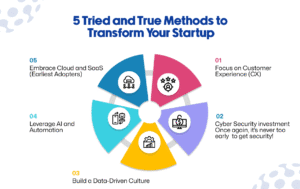
1. Embrace Cloud and SaaS (Earliest Adopters)
Cloud based infrastructure and SaaS platforms can offer tremendous value to startups in their early stages. Cloud-based IT is scalable, without the need for heavy up-front investments in hardware and maintenance. This flexibility enables startups to scale operations as user demand grows, without incurring costs when there are fewer users.
The SaaS applications optimize common capabilities such as accounting, project management and customer communications without on-premises hosting. This allows teams to be concerned only about their core business goals, not technical burden. Platforms like those explored in Aqlix IT Solutions technology consulting services provide guidance on selecting cloud tools that align with long-term goals.
2. Leverage AI and Automation
(Artificial intelligence-based tools help startups automate menial tasks, like responding to email inquiries, updating inventory and qualifying leads. By doing so, automation minimizes the chance of manual errors and liberates employees to leverage their time on higher valued activities and contributing to product innovation or engaging with customers. AI also enables faster and more informed decision-making by analyzing large data sets and detecting patterns that human teams might miss.
Chatbots, predictive analytics and automated reporting systems enable small teams to function as if they were bigger, well-resourced enterprises. This feature is critical for scaling up & it plays well with startups growing. By leveraging AI into workflows early, startups lay the foundations for strong operations that can be adjusted as business changes.
3. Build a Data-Driven Culture
A culture of data asks that decisions are made from insights, not guesswork. Startups can leverage analytics platforms to predict user behavior, discover the latest market trends and measure product performance. These are the pearls of insights which inform marketing strategies, product improvements and sales predictions with even greater timing.
Having teams embrace a “data-first” product mentality provides a level of transparency and allows everyone to set measurable goals. Dashboards and analytics platforms, as well as CRM systems provide a “single pane of glass” to show how the business is running. Cumulatively, this methodology nurtures a culture of ongoing improvement that’s grounded in tangible, action-oriented intel.
4. Focus on Customer Experience (CX)
Customer experience continues to be one of the most powerful competitive advantages for startups. Technology can be used to make service provision more efficient, personalize communication and create long-term customer value. Solutions such as chatbots, CRM systems and personalization engines deliver responsive and convenient interactions to the end users.
A strong CX strategy will also minimize churn by being proactive in addressing any issues. For instance, automated surveys, behavioral triggers and self-service portals allow customers to resolve issues easily while providing businesses with sound feedback. Favoring customer experience with digital means, you will boost credibility, engage people around your brand and build a basis for continued growth.
5. Cyber Security investment Once again, it’s never too early to get security!
As startups continue to put in place a cadre of digital systems, cybersecurity becomes pivotal to safeguarding customer trust and operational integrity. Startups businesses in their infancy frequently have sensitive data, ranging from user information and financial activities to intellectual property. A failure in any of them can lead to financial loss, reputational hit or long-term operational setback, if not ruin.
Startups can improve their cybersecurity posture by enforcing multi-factor authentication, backing up data, encrypting it and monitoring for threats. Early investment in secure systems, means protection for both the business and the customer. For teams that are using cloud solutions or third-party platforms, it is also important to verify compliance and security standards.”
Universal Hurdles Startups Encounter in the Process of Transformation
However, not all startups are able to make the most of digital transformation journey they face quite a few challenges. Tight budgets may limit access to sophisticated tools or technical resources. Small teams might also miss the expertise to test, adopt, and integrate new tech. There could also be resistance to using unfamiliar systems among staff, which may retard uptake.
These implementation issues may be resolved in a phased manner. “Startup companies can partake in digitizing key workflows they are a part of before moving onto more advanced technologies like AI, automation or large scale analytics. ACCELERATE RESULTS Strategic relationships with tech consulting companies such as those provided by Aqlix IT Solutions can assist teams in choosing technologies and integrating solutions to drive best practices that will be of benefit long-term for a business.
They are able to make technology decisions in the context of working with experienced partners. Instead, it is one more step to a united digital strategy powered by scalable infrastructure and effective workflows.
Conclusion
Digital transformation is not just about using the latest tools; it represents a greater ideology of a paradigm that’s more agile, faster moving and anticipatory in terms of strategy. For startups, it can be a turning point to lay the groundwork for achieving sustainable scaling with flexible, data-driven and customer centric operations.
Aqlix IT Solutions is assisting startups on their digital transformation journey to develop robust strategies for digitization and implementation which in return will enhance the efficiency, effectiveness of innovation and operational readiness. By planning carefully, and making strategic technology choices, while pursuing on-going improvements startups can create a solid digital footprint that will enable them to weather the storm in this global crisis and grow when better times return. Discover more on Business consulting perspectives Aqlix IT Solutions on making the right technology choices!
Frequently Asked Questions
When is the right time for a startup to start their digital journey?
Start-ups will benefit the most if they start integrating digital technologies earlier, focusing on technology like cloud and automation and analytics tools that can grow with their business.
Why does a small startup need AI isn’t that only for large enterprises?
All businesses, big or small, can benefit from AI. Even tiny start-ups can access AI tools for automation, customer support and data insights without major investment costs.
What is the most essential element of digital transformation?
The most essential is mindset. Technology counts, yes, but culture is more important at fostering innovation and learning, those who succeed overtime say.
How to minimize the expense of digital transformation for startup?
Costs are managed through the use of SaaS (software as a service) platforms, cloud tools and taking changes in phases. Consulting provides guidance on selecting the appropriate tools.
Why is cybersecurity important in early- stage startups?
Startups retain sensitive information from the very beginning. Trust, none of this would be possible without accomplishing the perfect data security task to save your business from failures and guarantee profit a decade or ten later.