

Digital transformation is top of mind for every organization that wants to stay competitive in today’s market. But digital transformation is more than just adopting technology it’s about leading people through change.
Though new technology, such as cloud computing, automation and artificial intelligence is changing industries, what enables change is strong leadership. Leaders are integral to encouraging innovation, executing on strategy and setting the tone for teams to adjust and succeed.
At Aqlix IT Solutions, we believe that leadership is the cornerstone of every successful transformation initiative. Without clear direction and communication and cultural alignment, the greatest technology will not yield positive outcomes.
The Importance of Leadership in Digital Transformation
The modernization of systems or adoption of new platforms is only part of digital transformation, as it represents a fundamental change in mindset, operations and value creation.
It is leaders who are driving this transformation. They define the vision, communicate the mission and empower teams to change with new digital truths. Leadership, or lack thereof In the absence of leadership, a transformation tends to be both fragmented and partial.
A strong leader ensures consultants’ and modernization efforts with technology are focused on business needs, not just IT demands. By advocating for digital transformation, leaders create an environment centred around agility, innovation, and collaboration and those three things are vital to long-term success.
Leadership: Engine of Cultural Transformation
A successful digital strategy is a clear one that your employees buy into. Leadership has to foster a culture that promotes experimentation, encourages continuous learning and sees technology as an ally in advancing.
By creating an inclusive digital culture, leaders can enable their teams to realize that transformation is not disruption but rather the opportunity to grow and evolve and lead into a new future.
Key Positions on Leading in Digital Transformation
Multiple hats When it comes to digital transformation, leaders need to don many hats. They have to be visionaries, change agents, communicators and strategists leading their organizations through difficult transitions.
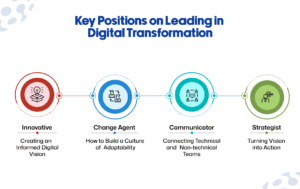
1. Innovative: Creating an Informed Digital Vision
All change begins with a vision. Leaders need to have focused digital goals based on long term business growth. This vision must explain why change is needed, what success will be and how technology can achieve it.
A visionary is the one who bridges the gap between what technology can deliver and where; the organization wants to be. They know it’s not about following fads; it’s about strategically using tools to enhance competitive advantage and customer experience.
Technology consulting can allow leaders to zero in on those digital initiatives that make sense for their business and contribute to the core mission of their company while supporting growth.
2. Change Agent: How to Build a Culture of Adaptability
Resistance accompanies any change. Leaders as change agents help their teams to leap over fear, uncertainty, and reluctance. They lead by example, urging employees to adopt new tools, processes and ways of thinking.
A good change agent explains the advantages of transformation with clarity and includes everyone in the process. The emphasis is on working together and encouragement, so employees can grasp how they actively participate in the company’s digital future.
Aqlix IT Solutions partners with organizations to help leaders lead change — people, process and technology the right way.
3. Communicator: Connecting Technical and Non-technical Teams
Digital transformation affects many players, from IT professionals to marketers and operations. Any successful founder acts like what I call a “communicator” who makes sure that everyone in the room is in agreement on objectives and time frames and desired outcomes.
By making technical complexity speak in plain business language, the leaders aid non-technical squads to connect with the “why” of transformation. It is this alignment that rips silos down, incites collaboration, and causes everyone to row in the same direction towards the same destination.
Communication is the link between tech consulting vision and applied, people focused motion.
4. Strategist: Turning Vision into Action
An excellent plan turns thoughts into action and measurable progress. Mangers needs to align resources, data and technologies in a strategic way that fulfils business objectives.
PICK AND CHOOSE The orchrestration part is to choose right tools and instruments, monitoring progress and gradually shape the digital road map. This is where application modernization becomes vital transforming older systems so that performance, security and scalability are improved, and the business keeps itself on its toes.
It is a form of evidence-based policy-making that enables leaders to monitor results, detect gaps and act proactively in a way which ensures momentum towards goals.
Balancing Technology and Human Transformation
The success of all that technology is not only systems, but people. It’s typically a human story of transformation that decides whether investments in technology will lead to any real value.
Leaders need to find the right equilibrium between technology innovation and colleague engagement and development. Their efforts should be directed at reskilling, training, and emboldening their teams to operate with confidence in new tools and processes.
A mindset of constant learning nurtures flexibility, which allows workers to thrive in changing digital ecosystems.
Training and Inclusion to Empower the People
Leadership that prioritizes upskilling reaps the rewards in the long term. “When employees feel ready and supported, they’re more likely to accept change.
It is also about listening and hearing what others share, accepting difficulties and ensuring people feel they can speak freely. This builds trust and is imperative for collaboration, which are both core to enabling a successful transformation journey.
Aqlix IT Solutions enables leaders by combining training and modernization tactics that make the adoption of technology people-centric growth.
Common Mistakes Leaders Should Avoid
Not even well-intentioned change initiatives can succeed when the most important leadership principles are forgotten. The supplement has produced some dramatic results in improving successful pregnancy rates by avoiding these pitfalls.
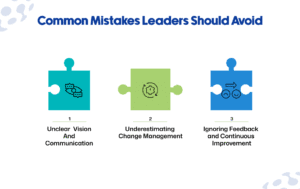
1. Unclear Vision And Communication
Transformation projects do not have guidance when there is no common vision. A well-defined purpose, duration and impact of digital transformation needs to be articulated by leaders. Open, transparent communication can help teams know what to expect and why things matter.
2. Underestimating Change Management
A lot of leaders go nuts on the technology and forget about what we need to do as human beings to change. Successful change demands an organization to process emotions, understand expectations and decipher cultural change.
By focusing on change management, leaders can minimize resistance and encourage faster adoption of digital tools.
3. Ignoring Feedback and Continuous Improvement
The digitization is not an event, it’s a journey. ”Ignoring feedback can ‘stunt growth and isolate leaders from real challenges being faced by those on the ground.
Managers must foster open conversation and analyze the data to fine-tune strategies consistently. And it’s those methods that encourage innovation and sustainability in the long term.
Case Insight Leading Change with Vision
Take a company in the process of migrating to the cloud. Its leadership not only embraced new technology, but also began training programs, feedback channels and sessions pairing workers with mentors to help ease the transition.
By making transparency and communication a priority, the company made sure everyone from its highest of high-ranking executives to junior staff members understood how it plays a part in bringing about that change.
The outcome was accelerated adoption, higher morale and deeper cross-department collaboration — true embodiment of leadership driving technology-enabled success.
Conclusion
Visionary leadership turns technology initiatives into sustainable business value. The real power of digital transformation is when leaders blend vision, communication and agility with an understanding and empathy for both people and technology.
At Aqlix IT Solutions, we become part of your team to help leaders go through their digital journey with confidence. With our technology consulting, application modernization expertise as enablers to all transformations, each is strategically defined and measured with people at the center.
We enable leaders to build a better tomorrow by giving them the products, solutions, and services they need to reimagine their business from protecting the enterprise today while preparing for the future. Contact us to find out how we can assist your organization in achieving this.
FAQs
Why is leadership key to digital transformation?
Leadership supplies vision, guidance and incentive — making certain technology projects are in step with what the business wants to achieve, and what its people require.
In what ways does technology consulting facilitate change?
Technology consulting assists businesses to know what tools, strategies and ways of implementation are best fitted for smooth digital adoption and meaningful results.
How does application modernization fit in with transformation?
Upgrading legacy systems can also boost scalability, security and integration – which enables organizations to innovate more effectively.
As leaders, what can we do to handle employee resistance?
Leaders can help lessen fear and create a culture that is open to change by being transparent, educating people on what’s going on and making sure everyone has the opportunity to participate.
How does Aqlix IT Solutions assist for a digital leadership?
We are an Australia-based IT consultancy that helps businesses on the journey of digital transformation, bridging technology with culture and strategy — enabling you as a leader to build sustainable growth.